

I once gave someone a self-help book for their birthday, called something like 'stop being such a lazy pig.' And you know what, they didn't even thank me!
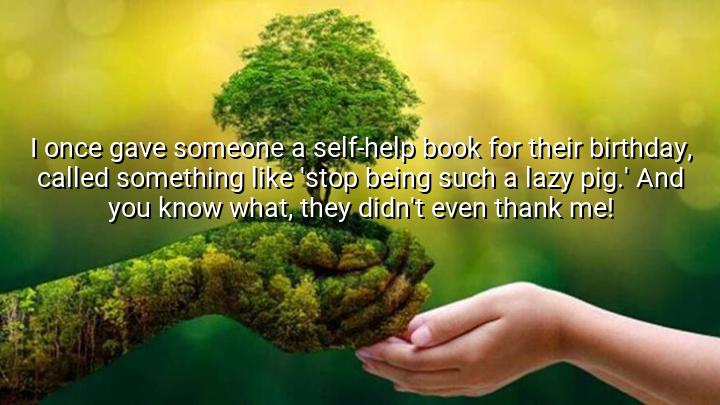




Lou Sanders’ quote, “I once gave someone a self-help book for their birthday, called something like 'stop being such a lazy pig.' And you know what, they didn't even thank me!” humorously illustrates the awkwardness that can arise from trying to help someone with their personal growth. Sanders is playfully recounting how she gave a self-help book, likely intended to motivate the recipient to make positive changes, but the response was not what she expected. The title, which she sarcastically paraphrases as 'stop being such a lazy pig,' is a funny and exaggerated way of showing how some self-help advice can be received poorly, even when it's meant to be helpful.
The humor in the quote lies in the expectation of gratitude from the recipient, which was not met. The idea of gifting a book with such a direct, possibly harsh title reflects the balance between trying to help someone and inadvertently causing offense. The lack of thanks points to the tension that often exists when giving self-help advice—while it may come from a place of good intentions, it may not always be well-received by the person it’s intended for.
Sanders’ use of humor and sarcasm also underscores the often uncomfortable reality of giving self-help advice. It highlights how personal growth and the desire for change can be sensitive topics, making it difficult for people to accept suggestions or books that challenge their current mindset. The quote captures the awkwardness of offering unsolicited advice, even when it comes from a caring or well-meaning place.
Ultimately, Lou Sanders’ quote is a comedic take on the challenges of giving self-help advice to others. It demonstrates the fine line between trying to support someone’s growth and accidentally offending them, while also showcasing Sanders’ witty approach to life’s more awkward moments. The quote reminds us that while self-help resources can be valuable, they are not always received with the appreciation one might expect.

AAdministratorAdministrator
Welcome, honored guests. Please leave a comment, we will respond soon