

I never really thought of myself as depressed so much as paralyzed by hope.
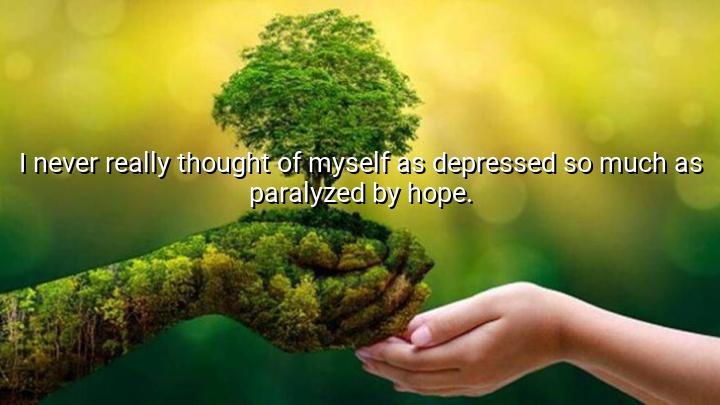




Maria Bamford’s quote, "I never really thought of myself as depressed so much as paralyzed by hope," offers a unique perspective on the experience of mental health. Bamford, known for her dark humor and openness about her struggles with mental illness, expresses the idea that hope, rather than being a purely positive force, can sometimes be overwhelming. In this case, hope becomes a burden, causing her to feel immobilized and unable to act. This reflects a feeling where the expectation of a better future can create pressure and anxiety, leaving one feeling stuck or unable to move forward.
The quote also suggests that the emotional state associated with hope isn’t always uplifting or motivating. Instead of inspiring positive action, hope can sometimes feel like a paralyzing force that creates unrealistic expectations. For Bamford, the weight of hope may have exacerbated feelings of helplessness, as she struggled to reconcile her desires for improvement with the limitations of her circumstances. This complexity of hope highlights its potential to cause internal conflict, especially when change seems elusive or unattainable.
Bamford’s approach to discussing her mental health is both candid and compassionate, showing her ability to find humor in her struggles while addressing their real and challenging aspects. By describing herself as "paralyzed by hope," she highlights the complexity of the human experience—where emotions like hope, though generally seen as positive, can sometimes hinder rather than help. This quote resonates with anyone who has felt overwhelmed by the weight of their expectations or their desires for a better future.
The origin of this quote comes from Maria Bamford, a comedian known for her honest and often self-deprecating humor about her personal life, including her struggles with depression and anxiety. Bamford has used her platform to discuss mental health with both humor and depth, particularly in her work on television and stand-up. This quote is a perfect example of her ability to explore complex emotions with both insight and levity, shedding light on the challenges of mental illness in a relatable way.

AAdministratorAdministrator
Welcome, honored guests. Please leave a comment, we will respond soon