

I like to help kids, work with kids in detention homes. Don't tell a kid what's right and wrong. He knows what's right and wrong. Find out what his attitude and his aptitude are; try to help him where he wants to go.
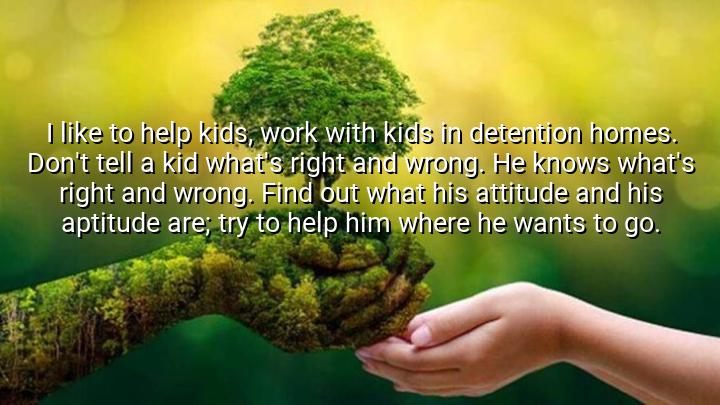




The quote by Evel Knievel expresses a thoughtful approach to working with kids in detention homes. He emphasizes that telling children what is right and wrong is not always effective because deep down, they already understand these concepts. Instead, Knievel advocates for understanding each child’s individual attitude and aptitude—their mindset and abilities—so that support can be tailored to help them achieve their own goals.
This perspective shifts the focus from judgment to empathy and personalized guidance. By recognizing that every child has unique strengths and ambitions, Knievel highlights the importance of nurturing those qualities rather than imposing external expectations. His approach is about empowering children to take control of their own futures.
The origin of this quote comes from Evel Knievel, a famous stunt performer known for his daredevil feats, but here he reveals a compassionate side focused on youth rehabilitation. His experiences working with troubled kids give him insight into the value of respect and encouragement over criticism and control.
Overall, the quote underscores the importance of listening to and supporting young people based on their individual needs and potential. It promotes a positive and constructive way to make a difference in the lives of children who may be facing difficult circumstances.

AAdministratorAdministrator
Welcome, honored guests. Please leave a comment, we will respond soon