

I just sort of take it from a character perspective, and I don't know if he was necessarily spiritual, but I do think he had hope. He was a character that was comfortable having hope in his life, and hope is faith.
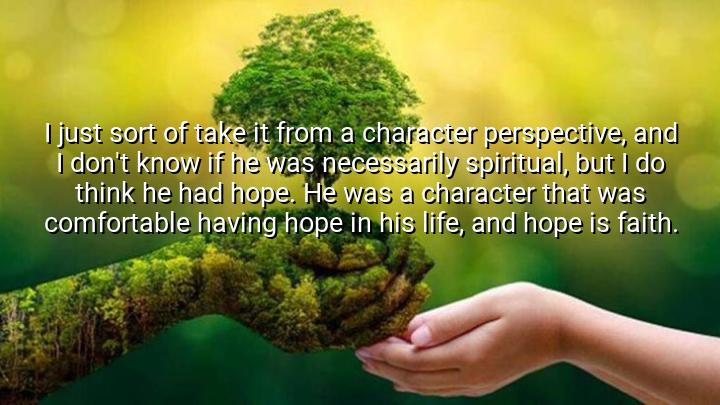




The quote by Ryan Gosling, "I just sort of take it from a character perspective, and I don't know if he was necessarily spiritual, but I do think he had hope. He was a character that was comfortable having hope in his life, and hope is faith," reflects his approach to understanding the inner world of a role he played. Gosling explains that even if the character wasn’t overtly spiritual, his ability to hold on to hope was a defining trait. By equating hope with faith, Gosling highlights how the two qualities can guide individuals through uncertainty, whether tied to religion or simply to personal belief.
By looking at things from a character perspective, Gosling shows how actors search for the emotional core of the roles they portray. In this case, hope served as the anchor for understanding the character’s motivations and outlook on life. He suggests that holding on to hope—believing things can improve even without evidence—is a form of faith that gives life purpose.
The origin of this quote comes from Ryan Gosling during an interview discussing one of his film roles. Known for his thoughtful and introspective approach to acting, Gosling often explores the subtle emotional layers of his characters. This statement demonstrates how he connects universal themes like hope and faith to craft authentic and relatable performances.
Ultimately, Gosling’s words remind us that hope is a powerful, almost spiritual force. Whether or not someone identifies as spiritual, maintaining hope allows people—and the characters he portrays—to face life’s challenges with resilience. His interpretation shows how faith, in its broadest sense, can be about believing in possibilities even when outcomes are uncertain.

AAdministratorAdministrator
Welcome, honored guests. Please leave a comment, we will respond soon