

I hope that five years and ten years from now, I'll be a better man, a more mature man, a wiser man, a more humble man and a more spirited man to serve the good of my people and the good of humanity.
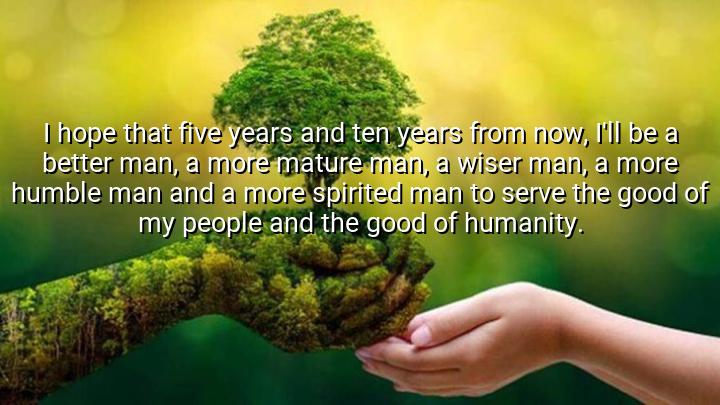




Louis Farrakhan’s quote, "I hope that five years and ten years from now, I'll be a better man, a more mature man, a wiser man, a more humble man and a more spirited man to serve the good of my people and the good of humanity," reflects a commitment to personal growth and self-improvement over time. Farrakhan is expressing his desire to evolve into a person who not only embodies wisdom and humility but who is also driven by a sense of purpose that serves the collective well-being of both his community and the broader human race. His focus is on long-term development, aiming for a continuous journey of self-betterment.
The quote also emphasizes Farrakhan's aspiration to serve with greater spirit and dedication, suggesting that personal growth is not just about acquiring knowledge but also about nurturing the inner strength and compassion required to make a positive impact on the world. His vision of himself as a leader is tied to the idea of service—to be a better individual in order to contribute meaningfully to both his own people and humanity at large. This reflects his commitment to social justice and spiritual development.
Farrakhan, the leader of the Nation of Islam, has been an influential figure in advocating for the empowerment of the African American community and the promotion of self-respect and spirituality. His words here reflect his belief in the importance of personal evolution and accountability in leadership. By expressing his hope to become a better man for the good of others, he underlines the value of growth in leadership and the responsibility leaders have to continuously improve in order to serve their communities.
The origin of this quote is rooted in Farrakhan’s reflections on leadership and personal responsibility. Throughout his career, he has spoken about the importance of self-discipline, humility, and spiritual growth in guiding others. This quote encapsulates his ongoing commitment to evolving as a leader who is not only a figure of authority but also a source of inspiration and guidance for the people he serves, reflecting his belief in continuous self-reflection and improvement.

AAdministratorAdministrator
Welcome, honored guests. Please leave a comment, we will respond soon