

I hope somewhere to break down what seems to be a kind of robotic communication between those in power and those who are understanding power.
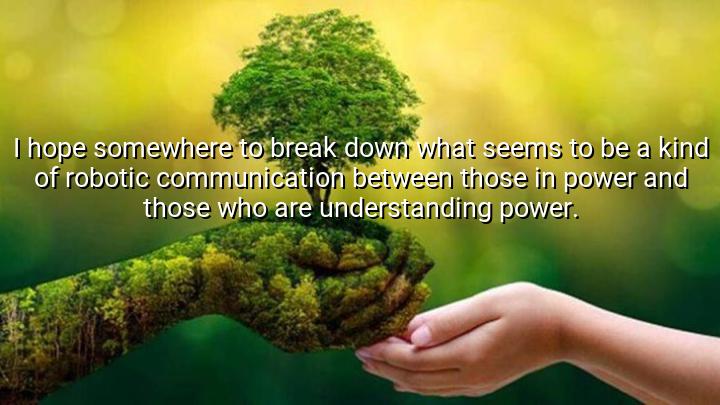




In this quote, Emily Maitlis expresses a desire to break down the robotic communication that often exists between those in power and those who are trying to understand power. She critiques the impersonal, formulaic nature of the exchanges between political leaders, public figures, and the public. Maitlis seems to suggest that these communications can feel cold, scripted, and disconnected from the real concerns of the people they are supposed to serve.
Maitlis highlights the gap between the powers that be and the public’s ability to engage with or fully grasp their decisions. She points to a perceived lack of genuine dialogue, where communication often feels rehearsed or controlled, rather than transparent and open. Her hope is to challenge this barrier and create a more meaningful, honest exchange that moves beyond performative communication to something that better serves both parties involved.
The term robotic communication suggests that conversations with those in power are often devoid of authenticity, focusing on delivering messages that are carefully constructed or filtered. Maitlis seems to be advocating for a more humanized approach, where real questions are answered with honesty and clarity, allowing for deeper understanding of how power operates and affects everyday life.
Ultimately, Maitlis's quote reflects a desire for authenticity in communication between leaders and the public. She hopes to create a dialogue where people feel truly heard and understood, and where those in power engage in more transparent and thoughtful exchanges with the people they influence.

AAdministratorAdministrator
Welcome, honored guests. Please leave a comment, we will respond soon