

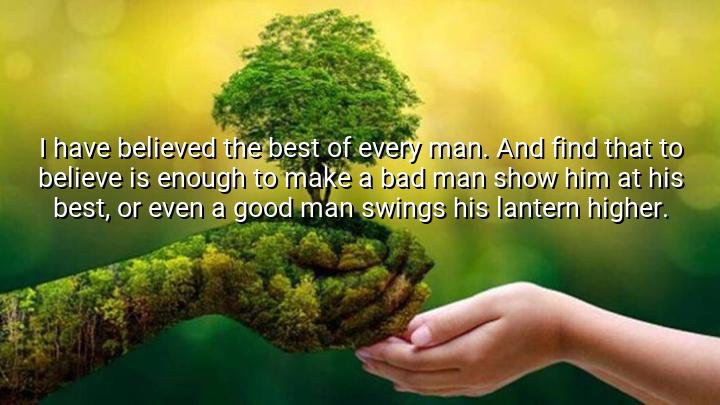
I have believed the best of every man. And find that to believe is enough to make a bad man show him at his best, or even a good man swings his lantern higher.




Certainly! Here’s a short explanation with bolded keywords related to the quote by William Butler Yeats:
The quote expresses William Butler Yeats’ optimistic belief in the power of trust and faith in others. By choosing to believe the best in every person, Yeats suggests that this positive expectation can inspire even a bad man to reveal his better qualities. Similarly, it encourages a good man to shine even brighter, symbolized by swinging his lantern higher. This highlights the transformative effect that belief and hope can have on human behavior.
Yeats emphasizes the idea that our perceptions and attitudes towards others can influence how they act. When we approach people with kindness and confidence in their potential, we can help bring out their best selves. This reflects a hopeful view of human nature and the impact of positive reinforcement.
The origin of this quote is William Butler Yeats, an Irish poet and playwright renowned for his deep explorations of human character and spiritual themes. His work often contemplates the complexities of good and evil and the possibility of redemption through belief and inspiration.
In summary, the quote encourages us to adopt a mindset of trust and hope in others, recognizing that this belief can uplift both the flawed and the virtuous. It serves as a reminder of the power of positive expectations to inspire better behavior and greater goodness.

AAdministratorAdministrator
Welcome, honored guests. Please leave a comment, we will respond soon