

I have a little hope that the nuclear holocaust doesn't happen.
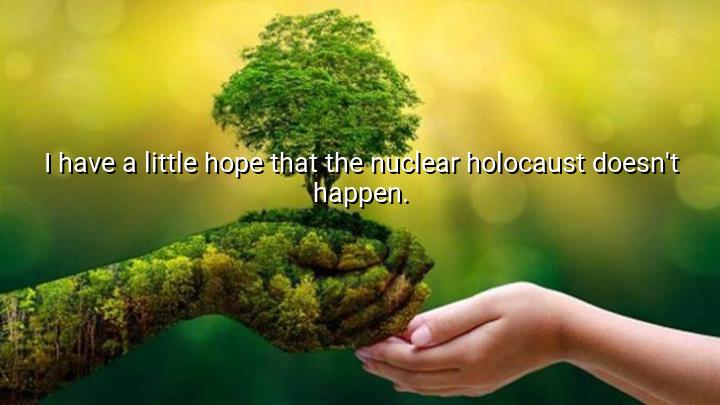




Masha Gessen’s quote reflects a cautious optimism about the possibility of avoiding a nuclear holocaust, acknowledging the terrifying potential for global destruction while maintaining a faint hope that it might be avoided. The phrase “a little hope” suggests that Gessen recognizes the severity of the threat posed by nuclear weapons but still holds on to the idea that there might be ways to prevent such an event. This expression of hope, however, is tempered by the awareness of the uncertainty and vulnerability that humanity faces in the age of nuclear armament.
Gessen, a Russian-American journalist and author, is known for their insightful commentary on politics, social issues, and the global challenges of the modern world, including the risks associated with nuclear warfare. This quote likely reflects their concern about the growing geopolitical tensions, the proliferation of nuclear weapons, and the increasingly volatile global environment. It shows Gessen’s awareness that, despite efforts to prevent nuclear conflict, the possibility remains ever-present, and the hope of avoiding it feels fragile.
The phrase “nuclear holocaust” refers to the catastrophic potential of global conflict involving nuclear weapons, which could lead to massive loss of life, environmental destruction, and irreversible social chaos. By expressing a hope that this disaster does not occur, Gessen highlights the critical role of diplomacy, disarmament, and international cooperation in preventing such a catastrophic event. The quote underscores the fragility of peace in the face of increasingly sophisticated military technologies and the potential consequences of their misuse.
The origin of this quote lies in Gessen’s reflections on the state of the world in the context of global security and the ongoing threats posed by nuclear weapons. As a writer and commentator, Gessen has frequently addressed themes of political instability, authoritarianism, and the global risks of modern conflicts, including nuclear escalation. This quote serves as a reminder of the precarious nature of human existence in the nuclear age, while also underscoring the responsibility that governments and individuals have to ensure the survival of future generations.

AAdministratorAdministrator
Welcome, honored guests. Please leave a comment, we will respond soon