

I feel it is an obligation to help people understand the relation of food to agriculture and the relationship of food to culture.
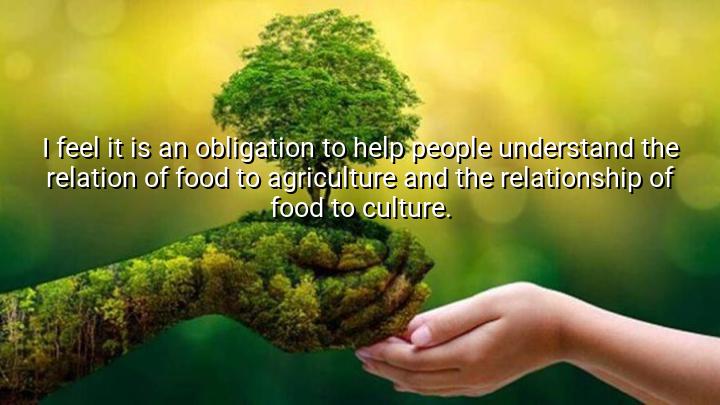




This quote by Alice Waters, the pioneering chef, author, and activist, expresses her lifelong mission to reconnect people with the origins and meaning of food. When she says, “I feel it is an obligation to help people understand the relation of food to agriculture and the relationship of food to culture,” Waters is emphasizing that food is not just something we consume—it is deeply tied to how it’s grown, who grows it, and the traditions it represents. She believes that understanding these connections is essential to creating a more sustainable, ethical, and enriching food system.
Waters highlights two fundamental relationships: food and agriculture, and food and culture. By understanding the link between food and agriculture, she means recognizing the importance of organic farming, seasonality, and local food systems. This awareness encourages people to support ecologically responsible practices that preserve the health of the planet and ensure fair treatment of farmers. The second relationship—food and culture—reminds us that food is a vital part of identity, heritage, and community, passed down through generations and reflective of who we are.
The origin of this quote is rooted in Waters’ work as the founder of Chez Panisse, a Berkeley, California restaurant that helped launch the farm-to-table movement in the United States. Through her nonprofit, the Edible Schoolyard Project, she also works to teach children about growing and cooking food, believing that these lessons foster responsibility, curiosity, and a deeper appreciation for the world around them. Her philosophy blends culinary excellence with activism, aiming to shift both how and why we eat.
Ultimately, Waters’ quote is a call to conscious living. She invites us to consider the full story behind every bite we take—from the soil it came from to the hands that prepared it. By understanding food’s relationship to agriculture and culture, we can make choices that are more thoughtful, sustainable, and connected, benefiting both ourselves and the wider world.

AAdministratorAdministrator
Welcome, honored guests. Please leave a comment, we will respond soon