

I don't know that hearing people have ever felt that experience of truly being left out. They have easy communication, while deaf people can't join in. It takes more time to communicate with us.
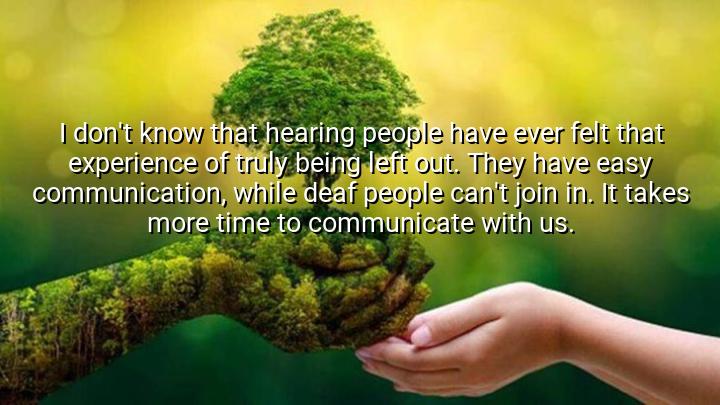




The quote by Millicent Simmonds — “I don't know that hearing people have ever felt that experience of truly being left out. They have easy communication, while deaf people can't join in. It takes more time to communicate with us.” — reflects the deep emotional and social challenges faced by Deaf individuals in a predominantly hearing society. Simmonds highlights the often-overlooked experience of exclusion that comes from barriers in communication, reminding us that while hearing people enjoy effortless interaction, Deaf people are frequently left on the margins due to the extra effort required for others to include them.
The origin of this quote comes from Simmonds’s lived experience as a Deaf actress, known for her roles in films like A Quiet Place and her advocacy for Deaf representation in media. As someone who communicates through American Sign Language (ASL), she brings attention to how accessibility in communication isn't just about technology or interpretation—it's about social willingness to engage and understand. Her words point to the reality that, even in inclusive environments, time, patience, and awareness are necessary for true inclusion.
When she says, “It takes more time to communicate with us,” Simmonds isn’t asking for pity—she’s advocating for empathy and effort. Communication is a two-way street, and in a fast-paced world, people often overlook the value of slowing down to connect meaningfully. Her statement challenges the hearing majority to reflect on their privilege and consider the invisible barriers that others face simply to be part of everyday conversations.
Ultimately, the quote is a powerful call for equity, not just in terms of access but in human connection. Simmonds invites us to imagine what it feels like to be left out not by choice, but by systemic inattention. Through her perspective, we’re reminded that inclusive communication takes more than tools—it takes intentionality, compassion, and a willingness to bridge the gap between different lived experiences.

AAdministratorAdministrator
Welcome, honored guests. Please leave a comment, we will respond soon