

I do not want to foresee the future. I am concerned with taking care of the present. God has given me no control over the moment following.
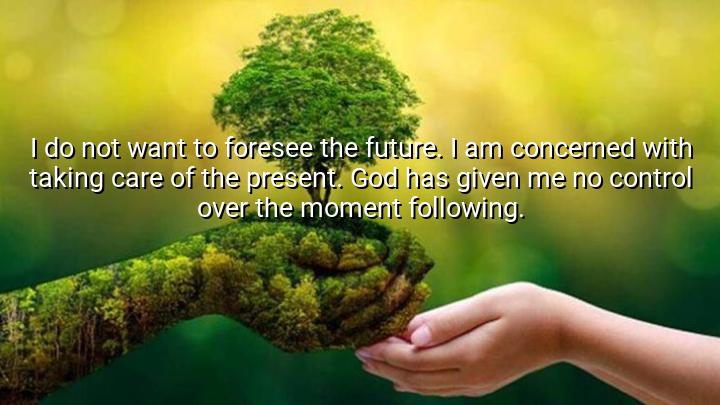




The quote "I do not want to foresee the future. I am concerned with taking care of the present. God has given me no control over the moment following" comes from Mahatma Gandhi, the renowned leader of India’s non-violent independence movement. This statement reflects Gandhi’s philosophy of living in the present and emphasizes the importance of focusing on the current moment rather than worrying about what lies ahead. For Gandhi, the present is where real action happens, and it is the only time we can truly influence, while the future remains beyond our control.
Gandhi's belief in focusing on the present was rooted in his deep commitment to mindfulness and spiritual discipline. He suggests that worrying about the future or trying to predict it is futile because it is something we cannot control. Instead, he advocates for dedicating our energy to what is within our reach—the present moment. By doing so, we can make meaningful changes and contribute to the greater good without becoming overwhelmed by the uncertainty of what might come next.
In the context of Gandhi’s life, this mindset was essential to his approach to activism and leadership. As he led India to independence through non-violent means, he consistently emphasized the importance of patience and faith in the present. Rather than seeking immediate results or obsessing over future outcomes, he believed in acting with integrity and purpose in the present, trusting that these efforts would ultimately lead to the desired future. This approach allowed him to stay grounded and focused even during the most challenging times.
Ultimately, Gandhi’s quote is a call to embrace the present and acknowledge our limitations in controlling what comes next. It is a reminder that the future is uncertain, and rather than letting it paralyze us with fear or expectation, we should concentrate on living each moment fully and with purpose. His philosophy encourages acceptance of the present as the only time we have power over, fostering a mindset of mindfulness and peace.

AAdministratorAdministrator
Welcome, honored guests. Please leave a comment, we will respond soon