

I am prepared for the worst, but hope for the best.
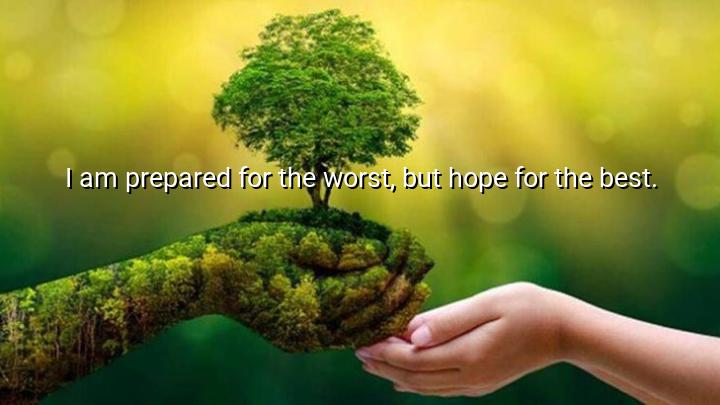




The quote "I am prepared for the worst, but hope for the best." by Benjamin Disraeli captures a timeless principle of wise living: the balance between realism and optimism. Disraeli, a prominent 19th-century British statesman and two-time Prime Minister, expresses the idea that one should be mentally and practically ready for adverse outcomes while still maintaining a positive and hopeful outlook. This dual mindset enables a person to face uncertainty with both caution and courage.
The phrase "prepared for the worst" reflects the importance of prudence and foresight. It means anticipating challenges, making thoughtful decisions, and being resilient in the face of setbacks. Rather than succumbing to fear, it encourages individuals to think ahead and take responsibility for what might go wrong, ensuring they are not caught off guard.
On the other hand, "hope for the best" speaks to faith, optimism, and a refusal to let pessimism dominate one’s perspective. It’s about believing in positive possibilities and aiming for the most favorable outcomes, even while being grounded in reality. This emotional balance helps maintain morale and inspires forward momentum, especially in uncertain times.
Benjamin Disraeli was known not only for his political acumen but also for his eloquence and philosophical insights. This quote, often cited in leadership and personal development contexts, reflects his deep understanding of human nature and public service. It remains a powerful reminder that a well-lived life requires both hope and preparation—believing in the good while being ready for the challenges.

AAdministratorAdministrator
Welcome, honored guests. Please leave a comment, we will respond soon