

Hope is a very thin diet.
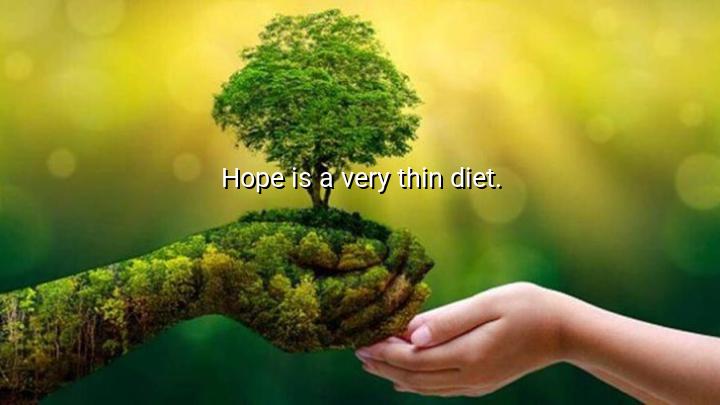




In this quote, Thomas Shadwell, an English playwright, suggests that hope is an insufficient or "thin" foundation when it comes to achieving sustained well-being or success. By describing hope as a "very thin diet," Shadwell is highlighting the idea that hope alone cannot nourish or sustain someone in the long term. It implies that while hope can be motivating, it must be accompanied by more concrete actions or resources to produce meaningful results.
Shadwell’s statement reflects his skepticism about relying solely on hope as a solution to life's challenges. In his view, while hope might provide short-term emotional comfort, it is ultimately inadequate if not supported by practical efforts or tangible resources. The use of the term "diet" also underscores the idea that nourishment—whether it’s physical, emotional, or intellectual—requires more than just abstract or idealistic thinking.
The origin of this quote comes from Shadwell's works during the late 17th century, a time when hope was often portrayed in literature as a moral or philosophical virtue. However, Shadwell seems to be offering a more realistic or even cynical view, suggesting that hope, while valuable, is not enough to sustain a person in a world that requires action and practical resources to navigate.
Ultimately, Shadwell’s words serve as a reminder that hope should be paired with action and substance to lead to meaningful change or success. It challenges the notion of relying on hope alone, urging individuals to take proactive steps in pursuing their goals rather than simply waiting for circumstances to change.

AAdministratorAdministrator
Welcome, honored guests. Please leave a comment, we will respond soon