

Home is, I suppose just a child's idea. A house at night, and a lamp in the house. A place to feel safe.
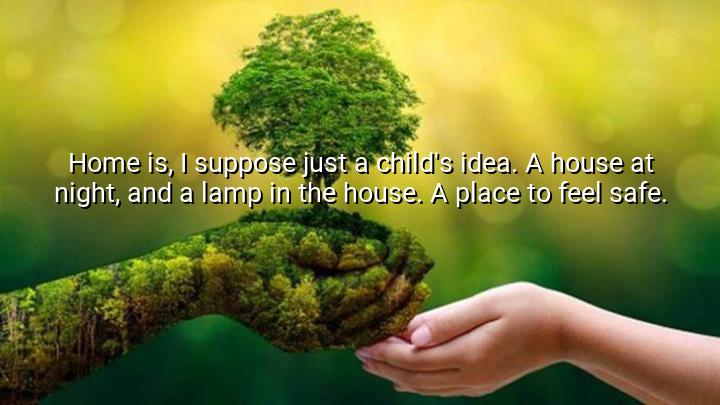




The quote "Home is, I suppose just a child's idea. A house at night, and a lamp in the house. A place to feel safe" by V. S. Naipaul reflects the simplicity and innocence with which a child perceives the concept of home. Naipaul suggests that the idea of home is rooted in basic comfort and security, focusing on the imagery of a house at night, illuminated by a lamp. For a child, home is not necessarily about material wealth or grandeur but about the emotional feeling of being protected and secure in a familiar environment.
The imagery of a house at night with a lamp evokes warmth and safety, symbolizing the peace and stability that a home provides. In contrast to the complexities of adulthood, where the notion of home may evolve into something more intricate or tied to broader concepts of identity and belonging, the child’s idea is more immediate and tied to basic needs for comfort and protection. It suggests that at its core, home is about a feeling of being sheltered from the world outside, where a simple act like turning on a lamp brings reassurance.
Naipaul’s words also subtly point to the contrast between childhood and adulthood in terms of how home is perceived. As we grow older, the concept of home becomes layered with responsibilities, expectations, and sometimes even discontent. However, the child’s idea of home remains uncomplicated, a safe haven untouched by external worries, embodying a sense of emotional clarity and comfort that many adults may long for.
Ultimately, this quote by Naipaul captures a universal truth about the enduring emotional need for safety and security. It reminds us that, at its essence, home is a sanctuary—a place where we can feel safe, free from the uncertainties of the world outside, much like a child experiences it.

AAdministratorAdministrator
Welcome, honored guests. Please leave a comment, we will respond soon