

He who would learn to fly one day must first learn to stand and walk and run and climb and dance; one cannot fly into flying.
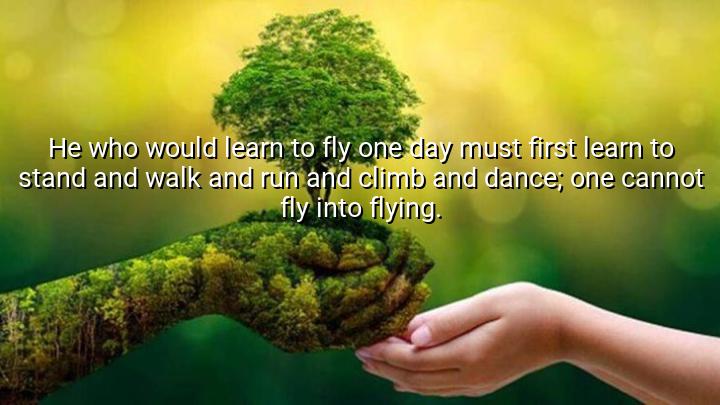




The quote by Friedrich Nietzsche emphasizes the importance of gradual development and mastery of fundamentals before attempting more ambitious or advanced goals. By stating, “He who would learn to fly one day must first learn to stand and walk and run and climb and dance,” Nietzsche illustrates that success and higher achievements require a strong foundation, patience, and persistent effort. The metaphor of flying represents ultimate aspirations or mastery, while the preceding steps symbolize essential skills and preparation.
Nietzsche underscores the necessity of progressive learning. The phrase “one cannot fly into flying” highlights that attempting to reach the highest level without proper preparation is futile. True accomplishment is a step-by-step process, where each stage of learning builds the strength, experience, and resilience needed for the next. This reflects his broader philosophy that personal growth and excellence are achieved through discipline, perseverance, and self-overcoming.
Friedrich Nietzsche, a 19th-century German philosopher and cultural critic, frequently explored themes of individual development, human potential, and the pursuit of greatness. This quote reflects his belief that meaningful achievement is rooted in continuous effort, incremental progress, and the cultivation of abilities. It emphasizes that personal transformation and mastery cannot be rushed.
Ultimately, the quote encourages a patient and disciplined approach to growth. Nietzsche reminds us that to reach lofty goals, one must first master foundational skills and stages of development, embracing the journey of learning and self-improvement. True “flight” or achievement comes not from shortcuts, but from careful preparation and cumulative experience.

AAdministratorAdministrator
Welcome, honored guests. Please leave a comment, we will respond soon