

Happiness will come from materialism, not from meaning.
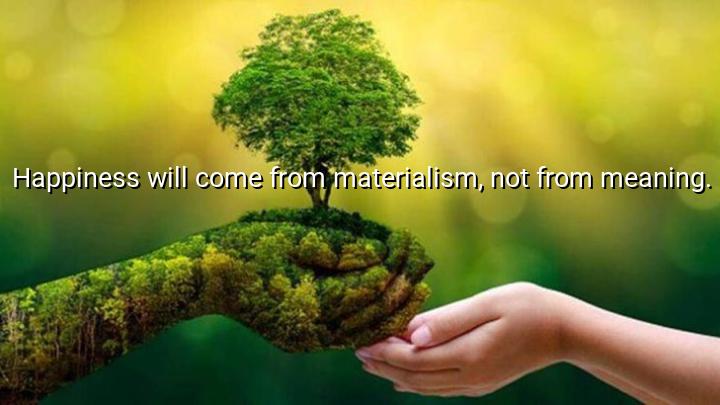




Andrei Platonov’s quote, "Happiness will come from materialism, not from meaning," offers a cynical view on the pursuit of happiness. He suggests that happiness in life is not found through deep meaning or spiritual fulfillment, but rather through materialistic pursuits—things like wealth, status, or physical comforts. This perspective challenges the conventional belief that true happiness comes from finding purpose, inner peace, or connection with others, instead proposing that tangible achievements or possessions are the keys to well-being.
The quote reflects a skeptical view of existential or spiritual fulfillment. Platonov, who was a Soviet writer often concerned with the complexities of human existence under political and social pressures, may have been commenting on the role of materialism in a world where traditional values and spiritual pursuits were overshadowed by political ideologies. His perspective suggests that in such a society, people may turn to material goods as a source of happiness because they offer a more immediately attainable form of satisfaction compared to abstract or difficult-to-reach ideals of meaning.
Andrei Platonov, known for his exploration of the struggles of the human spirit under Soviet rule, often delved into the theme of how society and material conditions shape human lives and desires. This quote could reflect his observations of a society in which the promise of happiness through meaning or personal purpose was often replaced with the pursuit of material gains, as the individual’s spiritual needs were pushed aside in favor of state-driven ideals.
Ultimately, Platonov’s quote challenges us to consider the limits of materialism as a source of lasting happiness. While material comforts can provide temporary satisfaction, they may not offer the deeper, more sustaining happiness that comes from meaning or purpose. It serves as a reminder that while material success may bring fleeting joy, true fulfillment likely lies in something deeper and more intangible.

AAdministratorAdministrator
Welcome, honored guests. Please leave a comment, we will respond soon