

Happiness is the cessation of suffering.
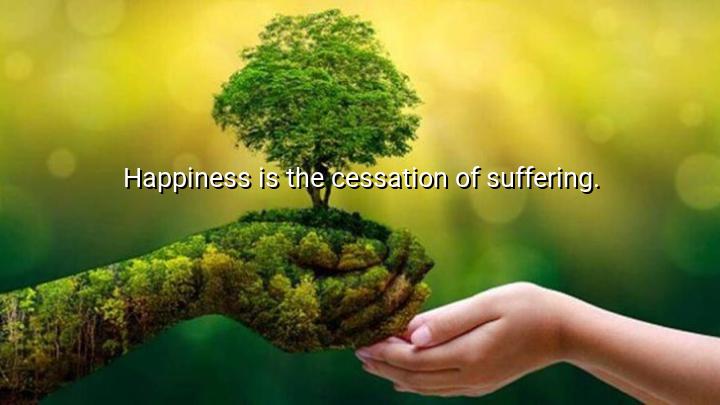




Thich Nhat Hanh’s quote, "Happiness is the cessation of suffering," encapsulates a central tenet of Buddhist philosophy. According to this view, true happiness is not about the pursuit of pleasure or material gain, but rather the end of suffering. In this context, suffering refers to the mental, emotional, and physical pain that arises from attachment, desire, and ignorance. Happiness, therefore, is the peace and freedom that comes when these sources of suffering are understood and transcended.
The quote emphasizes that the path to happiness lies in the release of attachments and the cessation of the cycle of desire and suffering. In Buddhist practice, this is often achieved through mindfulness, meditation, and cultivating compassion and understanding. By focusing on the present moment and letting go of attachments, individuals can find relief from the mental and emotional turmoil that contributes to suffering, thus leading to a more peaceful state of being.
This understanding of happiness as the cessation of suffering contrasts with more conventional views that equate happiness with external achievements or pleasurable experiences. Thich Nhat Hanh is pointing out that lasting contentment comes not from accumulating things or experiences, but from achieving inner peace and mental clarity. By addressing the root causes of suffering, one can attain a state of equanimity and joy that is not dependent on external circumstances.
The origin of this quote comes from Thich Nhat Hanh’s teachings as a Buddhist monk and spiritual leader. Throughout his work, he emphasizes the importance of mindfulness and the deep connection between inner peace and the cessation of suffering. His teachings encourage individuals to look within themselves and cultivate the mental and emotional freedom necessary for true happiness, a happiness that is enduring and not fleeting.

AAdministratorAdministrator
Welcome, honored guests. Please leave a comment, we will respond soon