

Happiness is neither virtue nor pleasure nor this thing nor that but simply growth, We are happy when we are growing.
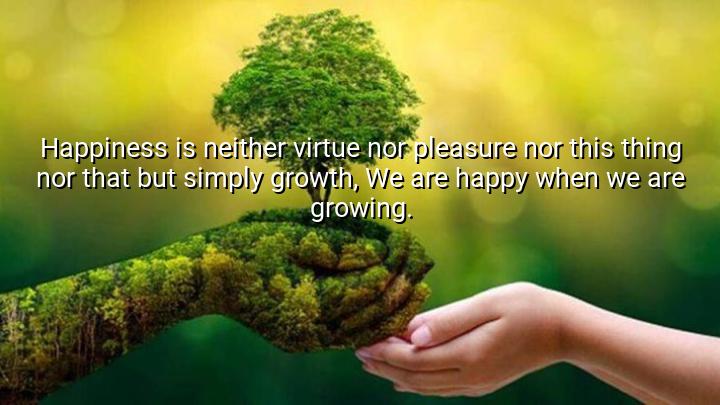




The quote by William Butler Yeats, "Happiness is neither virtue nor pleasure nor this thing nor that but simply growth, We are happy when we are growing," offers a profound perspective on the nature of happiness. Yeats suggests that happiness is not a static state or an external pursuit, but rather an internal process of development. Instead of being tied to fleeting emotions like pleasure or specific achievements, true happiness comes from the continuous journey of personal growth.
In this context, growth refers to the evolution of both the mind and spirit. Yeats implies that when we are developing—whether in our careers, relationships, or understanding of the world—we experience a sense of fulfillment. This aligns with the idea that the journey toward becoming a better version of oneself is what brings about lasting joy. Happiness, then, is not a destination, but a natural byproduct of striving to improve.
Yeats’s philosophy draws on the belief that humans are inherently driven by the desire to learn and evolve. As we encounter new challenges, gain insights, and refine our abilities, we unlock a deeper sense of contentment. This message suggests that even in difficult times, if we are still growing—adapting and learning from experiences—we can find happiness in the process itself, rather than waiting for external conditions to align perfectly.
Ultimately, Yeats’s quote encourages a shift in perspective: instead of measuring happiness based on external rewards or pleasures, we should focus on the growth that occurs as we navigate life's ups and downs. It’s a reminder that happiness is not something to chase but something that arises naturally as we continue to expand and transform.

AAdministratorAdministrator
Welcome, honored guests. Please leave a comment, we will respond soon