

Happiness is like a cloud, if you stare at it long enough, it evaporates.
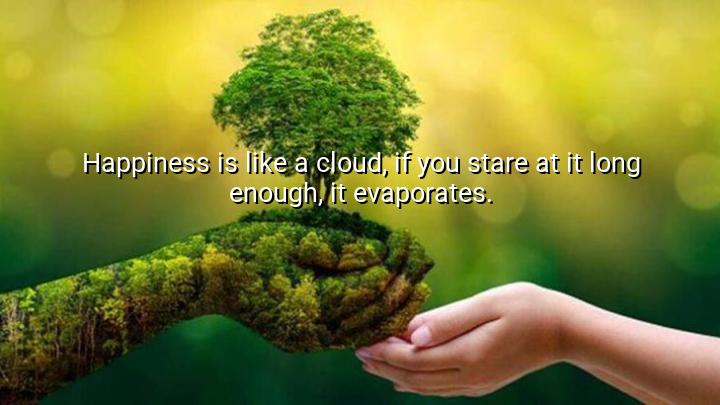




In this quote, Sarah McLachlan uses the metaphor of a cloud to describe the elusive nature of happiness. She suggests that happiness, much like a cloud, is temporary and constantly shifting. If you focus too intently on trying to grasp it, it will slip away. The idea is that happiness cannot be forced or held onto by overthinking or obsessing about it—it naturally comes and goes, often when we least expect it.
McLachlan’s words imply that happiness is a state that can’t be captured through constant striving or desperation. When we chase it too hard, it tends to evade us, much like staring at a cloud in the sky in an attempt to make it stay in one place. Instead of desperately seeking happiness, we should allow it to come and go, appreciating it when it arrives without trying to control it.
The quote also suggests that the more we focus on the pursuit of happiness, the more we risk losing sight of it entirely. By thinking too much about when or how happiness will manifest, we often create expectations that leave us unsatisfied. McLachlan emphasizes the importance of letting go and allowing happiness to emerge naturally, without forcing it into our lives.
Ultimately, McLachlan’s quote reflects a philosophical view on happiness: that it is a fleeting and unpredictable experience that is best enjoyed in the moment, without excessive attachment. By learning to embrace the transient nature of happiness, we can appreciate its presence when it arrives, without trying to control or cling to it.

AAdministratorAdministrator
Welcome, honored guests. Please leave a comment, we will respond soon