

Happiness is brief. It will not stay. God batters at its sails.
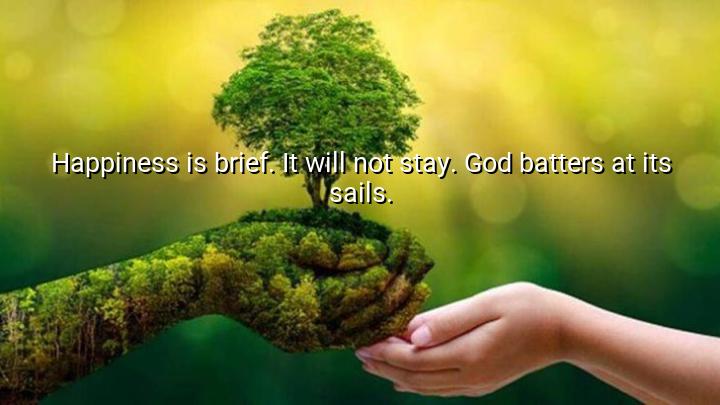




The quote "Happiness is brief. It will not stay. God batters at its sails." by Euripides reflects the fleeting nature of happiness and the forces beyond human control that can disrupt it. Euripides, an ancient Greek playwright, often explored themes of fate, suffering, and the impermanence of life. Here, he emphasizes that joy is often short-lived and that external factors, including the will of God or the whims of destiny, can quickly alter one's state of contentment.
The phrase "happiness is brief" suggests that moments of joy are transient, unable to be sustained for long periods. Euripides captures the essence of human experience, where times of peace or joy are often interrupted by hardship, loss, or change. In the context of his work, this often reflects the unpredictability of life and the inevitability of suffering that follows moments of joy.
The metaphor of "God batters at its sails" introduces the idea that divine forces or higher powers are at work in the world, shaping and controlling human fate. The image of sails being battered suggests that happiness is like a fragile vessel, tossed and torn by forces beyond our comprehension or influence. This could represent chance, circumstance, or the hand of fate that often disrupts moments of peace or fulfillment.
Ultimately, Euripides’ quote offers a philosophical reflection on the nature of human happiness. It serves as a reminder that joy is often ephemeral, and no matter how much we strive to hold onto it, external forces—whether divine or fate-driven—are always at play, challenging our efforts to maintain it. This aligns with the ancient Greek view of life, where humans must learn to accept the transitory nature of happiness and embrace the unpredictability of existence.

AAdministratorAdministrator
Welcome, honored guests. Please leave a comment, we will respond soon