

Happiness is a critical factor for work, and work is a critical factor for happiness. In one of those life-isn't-fair results, it turns out that the happy outperform the less happy. Happy people work more hours each week - and they work more in their free time, too.
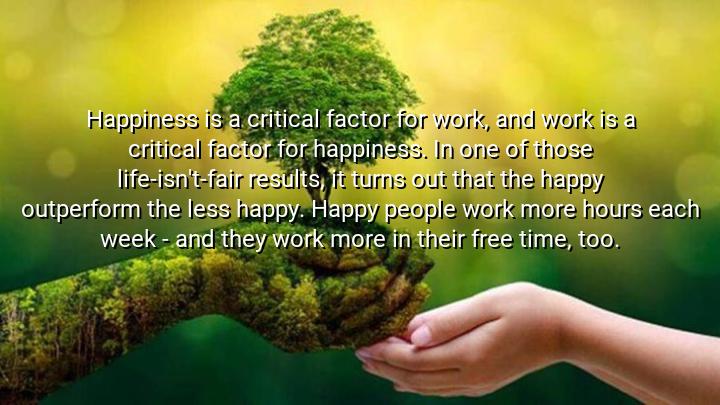




In this quote, Gretchen Rubin explores the interconnected relationship between happiness and work. She argues that happiness is not only a critical factor for success in the workplace but that work itself plays a significant role in cultivating personal happiness. According to Rubin, these two elements are mutually reinforcing: when we are happy, we tend to work more effectively, and when we engage in meaningful work, it can contribute to our overall sense of happiness and fulfillment.
Rubin also touches on the idea that happy people are more likely to be productive, working longer hours and even utilizing their free time for work-related tasks. This observation highlights the positive impact that happiness can have on a person’s work ethic. Happy individuals, according to Rubin, are not only more motivated to work but also find joy in the work they do, which leads to higher performance levels and greater job satisfaction.
The origin of the quote reflects Rubin's broader philosophy, which she examines in her book The Happiness Project. Rubin's work often explores the practical benefits of happiness and how it contributes to various aspects of life, including career success and personal development. By drawing this connection, she challenges the idea that happiness is an unrelated, purely emotional state, instead positioning it as a driver of success and productivity.
Ultimately, Rubin’s message encourages us to recognize the power of happiness in enhancing both our personal and professional lives. By fostering a sense of joy and fulfillment, we can not only improve our own well-being but also increase our ability to work effectively and pursue our goals with greater enthusiasm.

AAdministratorAdministrator
Welcome, honored guests. Please leave a comment, we will respond soon