

Happiness is a byproduct of function, purpose, and conflict; those who seek happiness for itself seek victory without war.
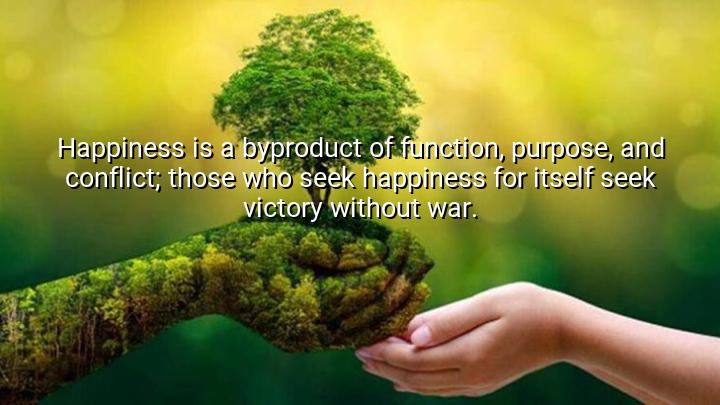




William S. Burroughs’ quote, "Happiness is a byproduct of function, purpose, and conflict; those who seek happiness for itself seek victory without war," presents a non-traditional view of happiness. Burroughs, an American writer known for his unconventional and often controversial works, suggests that happiness doesn’t come directly from pursuing it as a goal, but rather emerges as a result of engaging in meaningful activities and facing challenges. According to Burroughs, happiness arises when we live with purpose, fulfill our function in the world, and confront the conflicts that shape our personal growth.
In this context, function and purpose are essential components of a fulfilling life. By living with intention and contributing to something greater than ourselves, we naturally create the conditions for happiness. Burroughs implies that it is the active engagement in life—through work, relationships, and contributions—that fosters a sense of contentment, rather than simply chasing the idea of happiness without a deeper connection to one’s role or mission.
The reference to conflict highlights the notion that personal growth and happiness often come through overcoming challenges. Without conflict—whether internal or external—there is little room for development, and we may never experience the satisfaction of overcoming adversity. Burroughs is emphasizing that struggle and growth are intrinsically linked to the feeling of fulfillment, suggesting that happiness is more about the journey than the destination.
Finally, Burroughs contrasts this with the idea of seeking happiness directly, likening it to pursuing victory without war. This metaphor suggests that to attain something valuable, there must be effort, struggle, and challenge. In the same way, happiness is not a prize that can be easily won but a byproduct of engaging fully with life’s complexities. Thus, Burroughs’ quote challenges the idea of happiness as an end goal, proposing instead that it is found through living authentically and embracing life’s struggles.

AAdministratorAdministrator
Welcome, honored guests. Please leave a comment, we will respond soon