

Happiness is a ball after which we run wherever it rolls, and we push it with our feet when it stops.
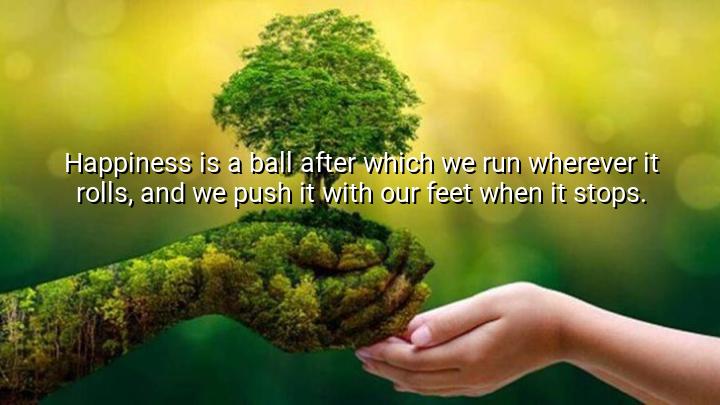




Johann Wolfgang von Goethe’s quote, "Happiness is a ball after which we run wherever it rolls, and we push it with our feet when it stops," uses the metaphor of a ball to illustrate the elusive nature of happiness. Goethe suggests that happiness is like a playful, unpredictable object that we chase after, constantly moving and shifting. Just as a ball can roll in any direction, happiness is often fleeting and difficult to control, making us feel as though we are always running after it. The pursuit of happiness, according to Goethe, can feel like an endless chase where we are never fully in charge of where it goes.
The second part of the quote, "we push it with our feet when it stops," adds another layer to the metaphor, indicating that when happiness appears to halt or become stagnant, we often push it forward ourselves in an attempt to keep it moving. This action represents our efforts to maintain happiness through external efforts, such as seeking new experiences, achievements, or material gains. However, even when we push or strive to keep happiness going, it may not last, reflecting the transient and elusive nature of joy.
Goethe’s quote reflects his deep understanding of the human condition, where the pursuit of happiness is often based on external circumstances rather than internal fulfillment. It speaks to the human tendency to chase after happiness as if it were something to be caught or attained, only to find that it is constantly slipping out of our grasp. This chasing behavior can lead to a cycle of continuous striving, without ever truly finding contentment.
Ultimately, Goethe’s perspective on happiness serves as a reminder of its transitory nature and the futility of trying to control or possess it. Instead, the quote encourages reflection on the nature of happiness itself—how it comes and goes, and how we often find ourselves running after it, even though we may never fully grasp it. It suggests that happiness is not a fixed destination, but an ongoing pursuit, one that we must approach with awareness and acceptance.

AAdministratorAdministrator
Welcome, honored guests. Please leave a comment, we will respond soon