

Happiness comes only when we push our brains and hearts to the farthest reaches of which we are capable.
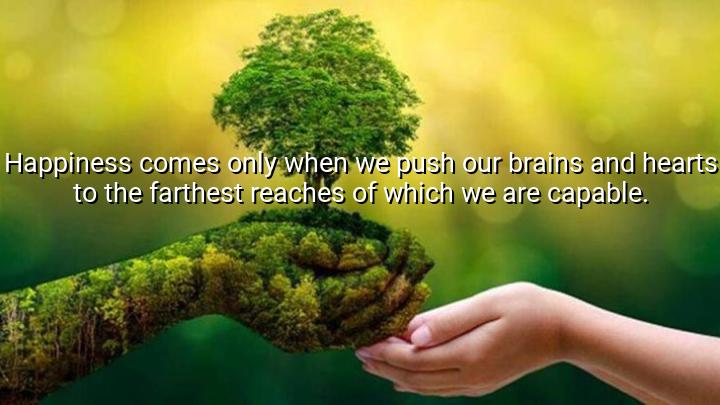




The quote "Happiness comes only when we push our brains and hearts to the farthest reaches of which we are capable" by Leo Rosten highlights the idea that true happiness is not something passive or easily attained, but is instead a product of actively striving toward personal growth and fulfillment. Rosten suggests that both the mind and the heart must be stretched to their limits in order to achieve a deep sense of satisfaction and joy.
The reference to pushing the brain implies that intellectual stimulation, creativity, and learning are essential components of happiness. Engaging the mind fully—whether through acquiring knowledge, solving problems, or exploring new ideas—can lead to a sense of achievement and inner peace. Similarly, by pushing the heart, Rosten alludes to emotional growth, empathy, and the courage to pursue meaningful relationships and experiences that resonate on a deep emotional level.
Rosten’s emphasis on reaching the “farthest reaches” speaks to the importance of stretching one’s potential in all areas of life. It implies that happiness is not something easily attained through comfort or routine; rather, it requires pushing beyond what is familiar and comfortable. Only when we test the limits of our abilities, whether mental or emotional, can we experience true fulfillment.
In essence, Rosten’s quote encourages us to take risks, challenge our boundaries, and grow both intellectually and emotionally in order to achieve the happiness that comes from self-actualization. It suggests that happiness is found not in passive contentment, but in the active pursuit of personal growth and emotional depth.

AAdministratorAdministrator
Welcome, honored guests. Please leave a comment, we will respond soon