

Happiness comes from... some curious adjustment to life.
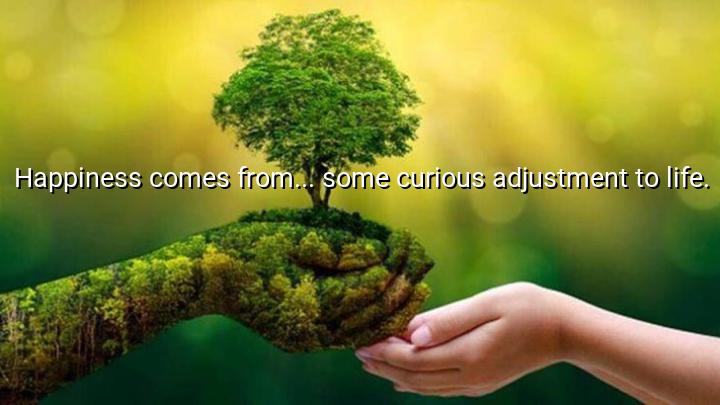




In this quote, Hugh Walpole, an English author, reflects on the nature of happiness as a process of adjustment to the circumstances of life. He suggests that happiness doesn’t come from external conditions or material possessions, but rather from an internal shift—a curious adjustment to how we perceive and navigate the challenges and realities of life. This view of happiness emphasizes adaptability and the importance of finding peace and contentment within one’s current situation, rather than seeking it in distant goals or unattainable dreams.
Walpole’s notion of happiness implies that it is not something that can be directly pursued or achieved in the traditional sense. Instead, it is a state that emerges when we make the necessary adjustments in our attitudes, expectations, and responses to life. The term curious suggests that this adjustment may not always be straightforward or logical, but is a subtle and personal process of finding balance and peace in life’s ever-changing circumstances.
The origin of this quote reflects Walpole’s understanding of human nature and the complexities of contentment. As a writer, he often explored the emotional and psychological intricacies of his characters, and this quote is consistent with his focus on the internal aspects of happiness. It suggests that while external factors influence our lives, true happiness is rooted in how we choose to engage with those factors, and how we adjust to life’s inevitable ups and downs.
Ultimately, Walpole’s message is that happiness is not a fixed destination but a dynamic, ongoing process of adapting to life. It is a reminder that contentment comes from within, through our ability to navigate challenges and make peace with the present. The "curious adjustment" to life is about developing the emotional resilience to find joy in all circumstances, rather than depending on ideal conditions.

AAdministratorAdministrator
Welcome, honored guests. Please leave a comment, we will respond soon