

Happiness: a way station between too little and too much.
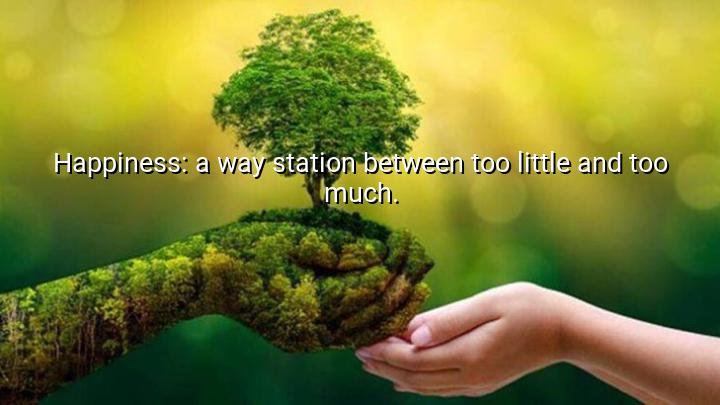




In this quote, Channing Pollock offers a nuanced perspective on the concept of happiness. He suggests that happiness is not a permanent state but rather a transitory condition, a "way station" that occurs between the extremes of too little and too much. The implication is that happiness is found in balance—neither in scarcity nor excess, but in the middle ground where one’s needs and desires are met without overwhelming them. This speaks to the idea that both deprivation and excess can lead to dissatisfaction, while balance brings contentment.
Pollock’s definition of happiness challenges the common notion that constant or unlimited satisfaction is the ultimate goal. By framing happiness as a temporary, transitional phase, he suggests that it is a dynamic, fleeting state rather than a permanent achievement. In essence, true happiness arises from finding a balance between wanting too little (which may lead to dissatisfaction) and having too much (which can lead to greed or emptiness).
The origin of this quote comes from Pollock's exploration of the human condition, often centered around the complexities of contentment and desire. Pollock, known for his work as a playwright and thinker, was influenced by ideas of philosophy and psychology, which consider happiness as a psychological and existential balance rather than a fixed goal. His work often delved into human emotions and how we interact with our desires and the world around us.
Ultimately, Pollock's quote suggests that happiness is an elusive yet essential state that exists not as a constant but as a fleeting experience found in the middle of life’s fluctuations. It invites reflection on the idea that moderation is key to emotional well-being, and that both extremes—whether of scarcity or abundance—are less likely to lead to happiness than finding a balance between them.

AAdministratorAdministrator
Welcome, honored guests. Please leave a comment, we will respond soon