

Grave was the man in years, in looks, in word, his locks were grey, yet was his courage green.
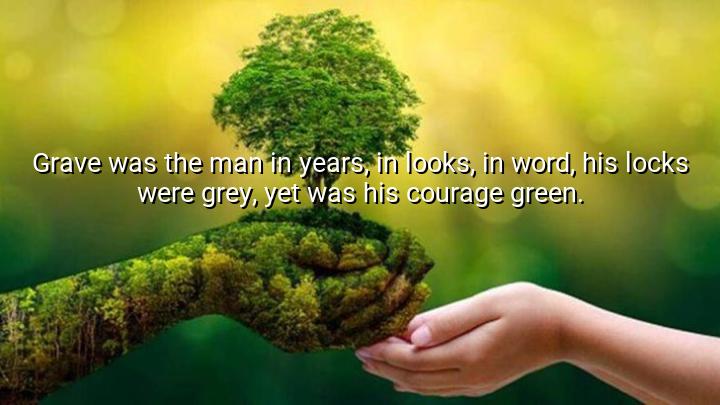




The quote "Grave was the man in years, in looks, in word, his locks were grey, yet was his courage green" by Torquato Tasso reflects the idea that despite the outward signs of age, wisdom, and experience, a person can still possess youthful courage and vitality. The juxtaposition of "grave" (meaning serious or aged) with "green" (symbolizing freshness and youth) highlights the timeless nature of bravery and determination, which can remain strong regardless of one's physical condition or advancing years.
Torquato Tasso, an influential Italian poet of the late 16th century, is best known for his epic poem Jerusalem Delivered. In this work, he explored themes of heroism, valor, and spiritual strength. The quote showcases his admiration for those who, despite being aged and physically changed, retain their inner strength and resolve to face challenges. It underscores the belief that true courage is not diminished by the passage of time.
In this context, the grey hair and the serious demeanor of the man symbolize the wisdom and gravity that often come with age. Yet, the phrase "his courage green" suggests that bravery is not constrained by age, but can remain vibrant and alive, unaffected by the years. Tasso's words evoke the timeless human quality of facing adversity with unwavering resolve, regardless of one's physical appearance or age.
This quote resonates beyond its historical context, reminding us that the spirit of courage can endure and even flourish throughout one's life. It speaks to the enduring nature of personal strength, which is not solely dependent on youth or appearance, but on the resolve to act with honor and bravery.

AAdministratorAdministrator
Welcome, honored guests. Please leave a comment, we will respond soon