

Given enough time, polar bears might migrate off the Arctic ice, evolve darker coats, find a different diet, and thrive in a new, warmer climate. But if the ice on which they depend disappears in a few decades, they are likely to die.
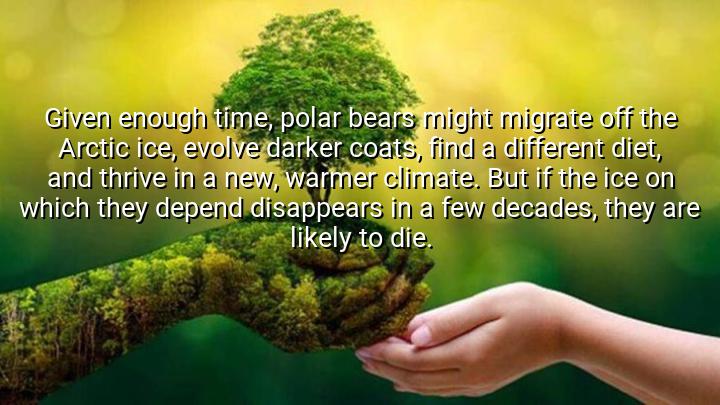




In this quote, Mohsin Hamid uses the example of polar bears to highlight the impact of climate change on species that are highly dependent on specific environmental conditions. He acknowledges that, over an extended period, polar bears could potentially adapt to new circumstances by evolving traits like darker coats or a different diet to survive in a warmer climate. This suggests that evolution is a slow process that could, in theory, allow species to adapt to significant environmental shifts.
However, Hamid emphasizes the urgency of the situation by pointing out that if the Arctic ice—which polar bears rely on for hunting and survival—disappears too quickly, the species may not have enough time to evolve and adapt. This is a direct reference to the current environmental crisis, where the rapid melting of ice due to rising global temperatures could outpace the ability of species like polar bears to adjust. As a result, they are likely to face extinction rather than adaptation.
The quote serves as a metaphor for the broader implications of climate change, not just for polar bears but for many other species and ecosystems that are vulnerable to rapid environmental changes. Hamid underscores the precariousness of relying on slow biological processes like evolution to overcome immediate, catastrophic changes caused by human activity, particularly the rapid loss of habitat due to global warming.
Ultimately, Hamid’s message is a stark reminder of the fragility of ecosystems and the potential for irreversible damage if the effects of climate change are not addressed in time. The polar bear’s struggle is symbolic of the broader threat that many species face as the planet’s climate continues to shift, emphasizing the urgent need for environmental action before it's too late.

AAdministratorAdministrator
Welcome, honored guests. Please leave a comment, we will respond soon