

Future generations are not going to ask us what political party were you in. They are going to ask what did you do about it, when you knew the glaciers were melting.
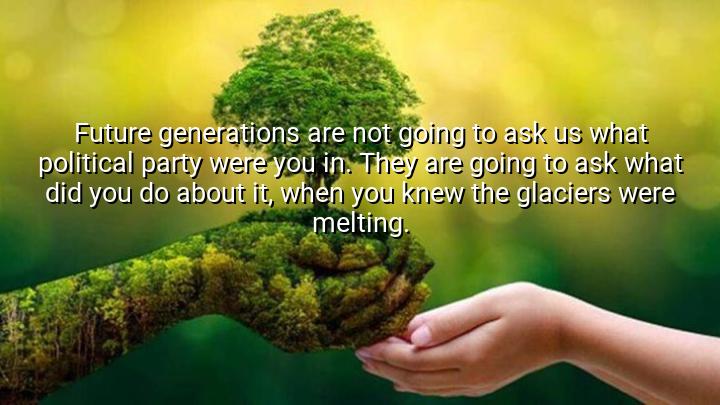




Martin Sheen’s quote, "Future generations are not going to ask us what political party were you in. They are going to ask what did you do about it, when you knew the glaciers were melting," highlights his concern for the long-term impact of climate change and the responsibility of the present generation to take action. Sheen suggests that future generations will not be concerned with political affiliations but will instead focus on the tangible actions taken—or not taken—by individuals and leaders in response to global challenges like the melting of glaciers and the broader environmental crisis.
The phrase "what did you do about it" points to a future where accountability will be central. Sheen is emphasizing that people will be judged by the decisions and efforts they made to address critical issues such as global warming and environmental degradation. This statement implies that, rather than being defined by partisan politics, we will be judged by our collective actions toward preserving the planet and ensuring its future.
The reference to "the glaciers melting" serves as a metaphor for the pressing environmental issues facing the world, particularly the effects of climate change. Glaciers, which are melting at an alarming rate due to rising global temperatures, symbolize the irreversible damage being done to the planet. Sheen’s message is a call to action—we cannot afford to ignore these signs, and we must act swiftly and decisively to prevent further harm.
In essence, Sheen’s quote underscores the importance of taking responsibility for the environment. It challenges the notion of political division, urging people to focus on the urgent need for collective action in addressing the climate crisis. By framing the issue in terms of legacy and future generations, Sheen calls on all of us to consider the world we are leaving behind and the steps we take today to mitigate the damage to the planet.

AAdministratorAdministrator
Welcome, honored guests. Please leave a comment, we will respond soon