

Food is not rational. Food is culture, habit, craving and identity.
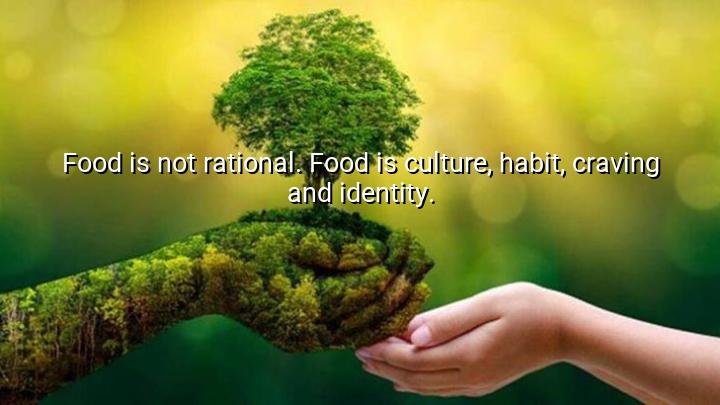




This quote by Jonathan Safran Foer, an acclaimed author and essayist, explores the deep emotional and symbolic meanings we attach to food. When he says, “Food is not rational,” Foer is emphasizing that our choices around eating often go beyond logic or nutritional value. While we might like to think of food in terms of calories or health benefits, in reality, what we eat is shaped by personal feelings, memories, and social traditions.
Foer expands on this by stating, “Food is culture, habit, craving and identity.” This highlights how food is intertwined with our cultural background, family routines, and even self-perception. What we eat—and how we eat it—can reflect our values, our community, and our sense of belonging. From religious traditions to regional dishes, food often serves as a symbol of who we are and where we come from.
The origin of this quote can be traced to Foer’s non-fiction work, especially in his book Eating Animals, where he explores the ethical, environmental, and emotional aspects of food consumption. In this context, Foer is challenging readers to examine their food choices not just from a rational standpoint, but through the lens of compassion, tradition, and consciousness. His writing encourages us to recognize how deeply personal and culturally embedded eating habits truly are.
Ultimately, Foer’s quote reminds us that food is more than fuel—it is a rich tapestry woven from history, emotion, and identity. Understanding this helps us approach food with more empathy, awareness, and respect for both our own experiences and those of others. It’s an invitation to see the plate not just as a meal, but as a mirror of the self and the world around us.

AAdministratorAdministrator
Welcome, honored guests. Please leave a comment, we will respond soon