

First of all, you ask me if the God of Christians forgives one who doesn't believe and doesn't seek the faith. Premise that - and it's the fundamental thing - the mercy of God has no limits if one turns to him with a sincere and contrite heart; the question for one who doesn't believe in God lies in obeying one's conscience.
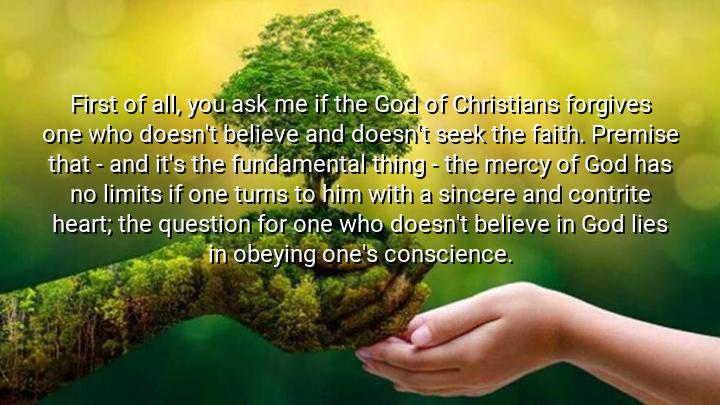




The quote by Pope Francis, "First of all, you ask me if the God of Christians forgives one who doesn't believe and doesn't seek the faith. Premise that - and it's the fundamental thing - the mercy of God has no limits if one turns to him with a sincere and contrite heart; the question for one who doesn't believe in God lies in obeying one's conscience," speaks about the boundless nature of divine mercy and the role of personal conscience. Pope Francis explains that God's forgiveness is not confined by human limitations and that sincere repentance is at the heart of receiving mercy. For those who do not believe, he emphasizes the importance of living according to a well-formed conscience.
By stating that God's mercy has no limits, Pope Francis underscores a central teaching of Christianity—that God’s love and forgiveness are infinite for those who seek it sincerely. However, he also acknowledges the situation of non-believers, suggesting that even without explicit faith, living justly and truthfully according to one's conscience aligns a person with moral goodness.
The origin of this quote comes from Pope Francis’s written response to an Italian journalist in 2013, during the early part of his papacy. The exchange was part of a broader conversation on interfaith dialogue, atheism, and the role of morality for those who do not hold religious faith. It reflects the Pope’s pastoral approach of inclusivity and his desire to focus on the universal aspects of compassion, integrity, and mercy.
Ultimately, Pope Francis’s words remind us that both believers and non-believers are called to live authentic lives. While faith and turning to God are central for Christians, following one’s conscience with sincerity is key for everyone. This message bridges differences and encourages a deeper respect for moral responsibility and human dignity.

AAdministratorAdministrator
Welcome, honored guests. Please leave a comment, we will respond soon