

Fast food is popular because it's convenient, it's cheap, and it tastes good. But the real cost of eating fast food never appears on the menu.
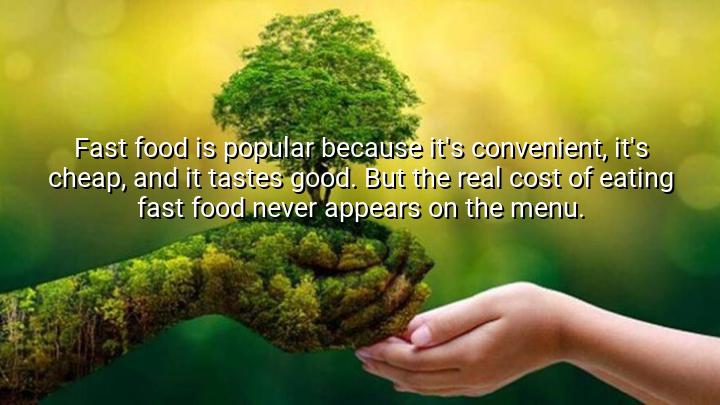




This quote by Eric Schlosser critiques the widespread appeal and hidden consequences of the fast food industry. When he says, “Fast food is popular because it’s convenient, it’s cheap, and it tastes good,” Schlosser acknowledges the practical reasons why millions of people are drawn to it. Fast food offers speed, affordability, and flavor, which fit the demands of modern, fast-paced lifestyles. However, he immediately contrasts this surface-level appeal with a deeper warning: “The real cost of eating fast food never appears on the menu.”
By “real cost,” Schlosser refers to the hidden consequences associated with fast food consumption—such as its contributions to poor health, environmental damage, animal cruelty, and exploitative labor practices. These costs are not reflected in the price of a burger or fries, but they are paid in terms of public health crises like obesity and diabetes, ecological degradation, and the socioeconomic toll on underpaid workers. His message is that what seems affordable in the short term may be very expensive in the long run—for individuals, communities, and the planet.
The origin of this quote comes from Schlosser’s groundbreaking book Fast Food Nation, published in 2001. In this investigative work, he exposed the industrial food system behind America’s fast food culture, highlighting its darker realities through journalism and meticulous research. The book became a major force in the food ethics movement, influencing public opinion and sparking conversations about transparency and accountability in food production.
Ultimately, Schlosser’s quote is a call to look beyond the surface appeal of fast food and examine its true impact. He urges consumers to consider the broader consequences of their eating habits and to demand better standards from the food industry. His words remain a powerful reminder that convenience and cost should never blind us to the ethical and health implications of what we eat.

AAdministratorAdministrator
Welcome, honored guests. Please leave a comment, we will respond soon