

Evil communication corrupts good manners. I hope to live to hear that good communication corrects bad manners.
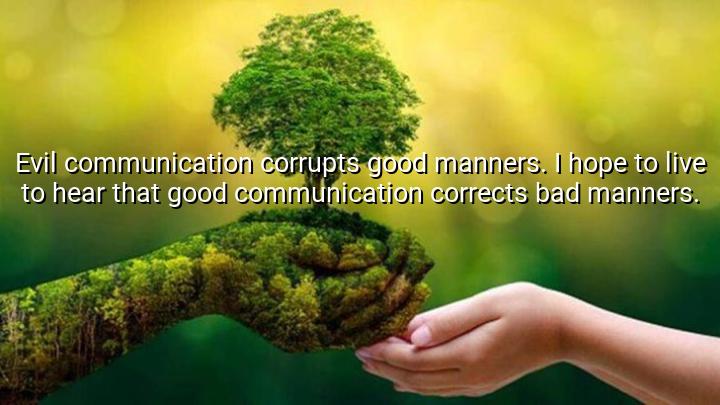




The quote “Evil communication corrupts good manners. I hope to live to hear that good communication corrects bad manners.” by Benjamin Banneker reflects a deep belief in the power of language and influence to shape moral behavior and social conduct. The first part of the quote references a well-known biblical proverb from 1 Corinthians 15:33, which warns that negative influences and corrupt speech can erode virtue and lead people away from righteous behavior.
Banneker, a free African-American scientist, surveyor, and almanac author in the 18th century, cleverly builds upon this saying by adding a hopeful twist — that just as evil words can corrupt, so too can good communication uplift and reform. He expresses a desire to see a world where positive discourse, respectful dialogue, and ethical expression have the power to improve character and correct improper conduct.
At its core, the quote explores the moral responsibility of communication. Banneker emphasizes that how we speak, listen, and engage with others can either lead to decay or improvement in social behavior. In an age when manners, dignity, and civic discourse were crucial to public life — particularly for someone like Banneker who fought for recognition in a racially divided society — this message carried profound weight.
The origin of this quote is rooted in Banneker’s advocacy for justice, education, and equality during a time of immense social injustice. He often used his writings to challenge prejudice and call for moral reform. By expressing faith in the corrective power of good communication, Banneker not only critiques harmful rhetoric but also casts language as a tool for progress, reconciliation, and social healing.

AAdministratorAdministrator
Welcome, honored guests. Please leave a comment, we will respond soon