

Everyone has their dreams and their rise and their own version of a fall from grace.
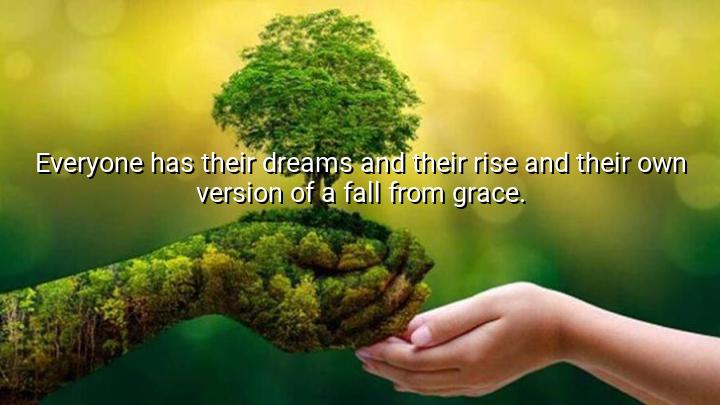




In the quote, "Everyone has their dreams and their rise and their own version of a fall from grace," Molly Bloom reflects on the universal experience of striving for success and facing challenges along the way. She acknowledges that every individual has their own aspirations, moments of achievement, and inevitably, times of setback or disappointment. The "fall from grace" refers to the idea that at some point, many people face a personal downfall or a significant shift that challenges their previous successes, revealing the fragility of both dreams and reality.
Bloom’s quote highlights the impermanence of success and failure, emphasizing that no one is immune to facing challenges or falling from their idealized position. The idea of a "fall from grace" suggests a moment when someone experiences a loss of respect, reputation, or status, often in a public or personal way. However, Bloom doesn't focus solely on the fall but acknowledges that these experiences are a natural part of the human journey, implying that they are important for growth and self-discovery.
The origin of this quote comes from Molly Bloom, the character from James Joyce's famous novel "Ulysses". In the book, Molly Bloom's monologue at the end of the story touches upon themes of identity, love, and personal experience. Her reflection on dreams and downfalls highlights the complexity of human existence and the cyclical nature of highs and lows in one's life.
Ultimately, Bloom’s quote serves as a reminder that dreams and success are not static. Everyone's journey includes both rises and falls, and each person has their own narrative of triumph and defeat. It encourages acceptance of these ups and downs, seeing them not as failures but as integral parts of the human experience.

AAdministratorAdministrator
Welcome, honored guests. Please leave a comment, we will respond soon