

Every possession and every happiness is but lent by chance for an uncertain time, and may therefore be demanded back the next hour.
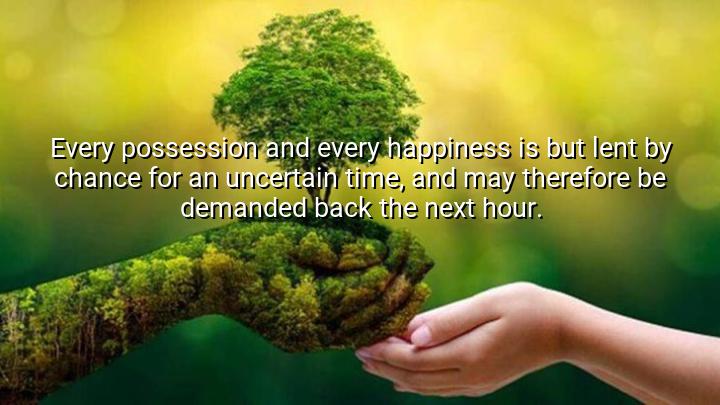




In this quote, Arthur Schopenhauer expresses a philosophical perspective on the fleeting nature of possessions and happiness. He suggests that everything we have, whether material or emotional, is not truly ours but rather lent to us by chance for a temporary period. The idea of being "lent" underscores the impermanence of all things, highlighting that nothing is truly guaranteed or permanent.
Schopenhauer’s statement that these things "may therefore be demanded back the next hour" reflects his pessimistic worldview, where he saw life as inherently uncertain and unpredictable. According to him, our sense of security and happiness is fragile, and we should not take anything for granted. The quote invites a sense of humility and acceptance of the transitory nature of life, urging us to recognize that our circumstances can change without warning.
This idea is tied to Schopenhauer's broader philosophy, which emphasizes the ephemeral nature of existence and the suffering that arises from attachment to things. By acknowledging that all possessions and happiness are temporary, he advocates for detachment and the acceptance of life’s uncertainties. This mindset can lead to a deeper understanding of life’s impermanence and a more balanced approach to what we value.
Schopenhauer's philosophy draws heavily from Eastern thought, particularly Buddhism and Hinduism, which also emphasize the transient nature of life and the need to let go of attachments. His ideas challenge the typical Western pursuit of lasting happiness through material or external gains, instead promoting a more introspective and accepting view of life’s fleeting moments.

AAdministratorAdministrator
Welcome, honored guests. Please leave a comment, we will respond soon