

Every night when I go to bed, I hope that I may never wake again, and every morning renews my grief.
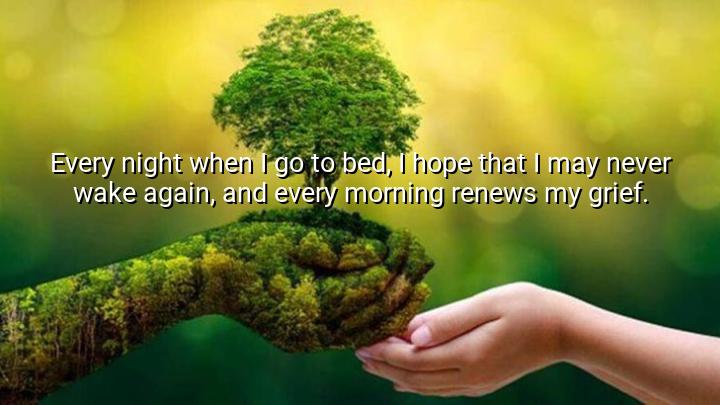




The quote "Every night when I go to bed, I hope that I may never wake again, and every morning renews my grief" by Franz Schubert expresses a deep sense of despair and suffering. Schubert, a renowned Austrian composer, conveys the emotional anguish of someone who is struggling with inner pain so intense that they wish for it to end with death. However, the arrival of a new day brings only the continuation of their grief, as they awaken to the reality of their ongoing suffering. This stark contrast between the desire for peace through death and the painful return to life highlights the torment of hopelessness.
The origin of this quote is linked to Schubert’s personal life, which was marked by health struggles and emotional turmoil. He suffered from illness throughout his short life, and his physical and mental well-being often influenced his music and personal reflections. Schubert's feelings of hopelessness and despair may have been exacerbated by the early loss of his own health and the knowledge that he faced a short life, as he passed away at the age of 31. This despair likely seeped into his creative work, contributing to the melancholy tone of much of his music.
Schubert’s words also highlight the contradiction between life and death. The hope for an escape from suffering, through death, followed by the renewal of grief each morning, reflects the emotional cycle of someone trapped between despair and the unwillingness to let go. It emphasizes the struggle between acceptance of fate and the yearning for peace, and how grief can be an unrelenting force in one’s life.
In essence, Schubert’s quote speaks to the emotional weight of suffering, where each new day feels like a burden rather than a gift. It illustrates the difficulty of finding relief from sorrow, and the painful realization that grief can sometimes feel eternal. His words offer a glimpse into the dark side of the human experience, where hope for respite seems distant, and life itself becomes a cycle of unending emotional pain.

AAdministratorAdministrator
Welcome, honored guests. Please leave a comment, we will respond soon