

Every man is his own ancestor, and every man is his own heir. He devises his own future, and he inherits his own past.
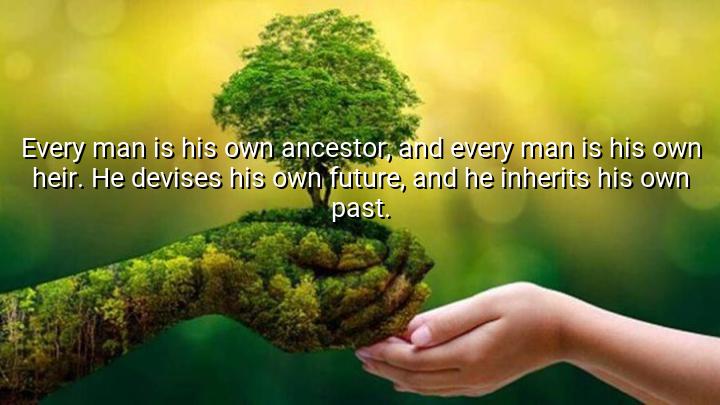




The quote "Every man is his own ancestor, and every man is his own heir. He devises his own future, and he inherits his own past" is from Frederick Henry Hedge, an American philosopher, theologian, and Unitarian minister. In this statement, Hedge explores the interconnection between an individual’s past and future, suggesting that one is not only shaped by their history but also responsible for creating their own path forward. This philosophical idea emphasizes that the choices we make today shape both our future and how we understand and connect with our past.
Hedge's use of "ancestor" and "heir" suggests that we inherit the legacies and decisions of those who came before us, but we also have the power to shape our own destinies. The notion that "every man is his own heir" speaks to the idea that we are the inheritors of our own actions—the consequences of our choices and behaviors are passed down through time. We are not merely victims of our circumstances but active participants in creating our future.
The part of the quote where Hedge says "He devises his own future" highlights the concept of personal agency and the importance of self-determination. Instead of attributing one’s life to fate or external forces, the quote insists that each individual has the ability to chart their own course. This is particularly significant in the context of growth, as it implies that individuals are responsible for their own development, both personally and philosophically.
Ultimately, this quote reflects Hedge's belief in personal responsibility and empowerment. It encourages the idea that the past is not a fixed narrative we must follow, but something we can understand and learn from to guide our future. By recognizing the ways in which we inherit our past while also creating our future, we gain greater control over our personal journey.

AAdministratorAdministrator
Welcome, honored guests. Please leave a comment, we will respond soon