

Every man has his own courage, and is betrayed because he seeks in himself the courage of other persons.
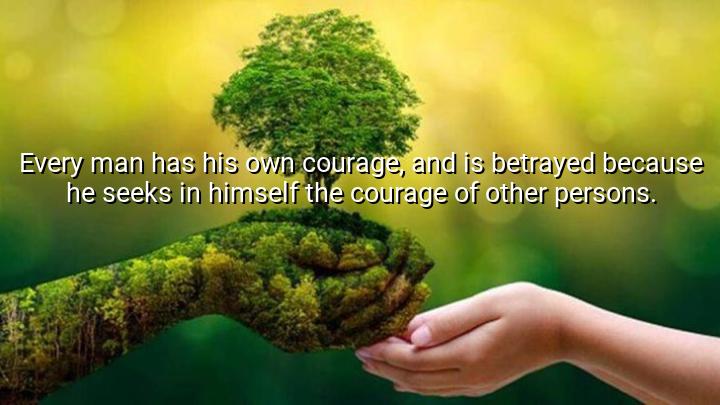




The quote by Ralph Waldo Emerson, "Every man has his own courage, and is betrayed because he seeks in himself the courage of other persons," suggests that true courage is unique to each individual. Emerson emphasizes that each person possesses their own form of bravery, which is shaped by their own experiences, values, and inner strength. When someone tries to emulate the courage of others, they risk losing sight of their own authentic bravery, ultimately feeling betrayed by their inability to live up to someone else's standards.
Emerson's words also highlight the idea of individuality and the importance of recognizing and trusting one’s own abilities. By looking to others for guidance on how to be courageous, a person may become disconnected from their own sense of self and strength. The pursuit of another person’s courage can lead to feelings of inadequacy or failure, as each individual’s path to bravery is deeply personal.
The betrayal mentioned in the quote refers to the emotional conflict that arises when one fails to live up to external expectations, especially those set by others’ actions or personalities. Emerson believes that this pursuit of foreign courage is misguided, and true strength comes from embracing one’s own unique way of facing challenges. In essence, the quote speaks to the danger of comparing oneself to others and the importance of cultivating personal growth and confidence.
The origin of the quote lies in Emerson’s broader philosophy of self-reliance and individualism, which is a central theme in his writings. In his works, Emerson often stresses the importance of trusting one’s intuition and developing the inner strength to stand apart from societal expectations. This quote captures the essence of that philosophy, encouraging individuals to recognize and embrace their own form of courage rather than trying to mirror someone else’s.

AAdministratorAdministrator
Welcome, honored guests. Please leave a comment, we will respond soon