

Every government has as much of a duty to avoid war as a ship's captain has to avoid a shipwreck.
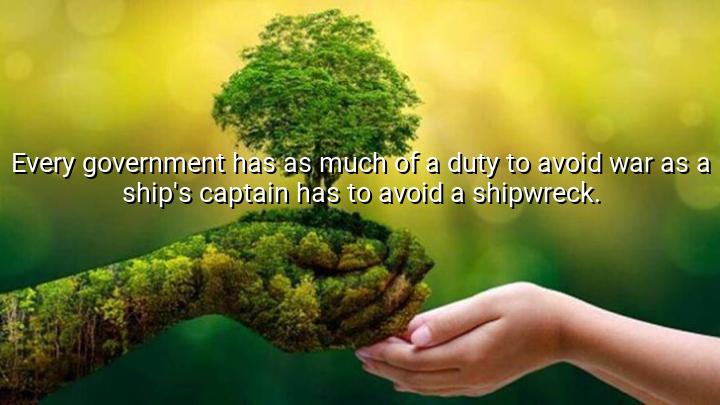




The quote, "Every government has as much of a duty to avoid war as a ship's captain has to avoid a shipwreck," by Guy de Maupassant, draws a parallel between the responsibilities of a government and a ship's captain in preventing catastrophe. Maupassant, a French writer known for his works on human nature and society, is emphasizing that just as a captain’s primary duty is to ensure the safety of the ship and its passengers, a government’s duty is to protect its citizens by avoiding the destruction and chaos of war. He argues that war should be seen as a failure of leadership, and that governments have a moral responsibility to use all available means to prevent it.
Maupassant’s statement suggests that war, like a shipwreck, is a dire event that can be avoided through careful diplomacy, negotiation, and conflict resolution. He implies that governments should not rush into war or let it escalate due to mismanagement or lack of foresight. In this way, the government's duty is not only to defend the nation but also to prevent conflict from reaching the point where it causes unnecessary destruction and loss of life.
The origin of this quote reflects Maupassant’s broader commentary on society and human nature, often expressed through his short stories and novels. Maupassant had a keen interest in social issues, including the impact of war on human lives. Writing in the late 19th century, he witnessed the Franco-Prussian War and the tensions surrounding it, which likely influenced his perspective on the destructiveness of war and the importance of avoiding it. His words serve as a reminder of the human cost of conflict and the critical role that leadership plays in maintaining peace.
This quote remains relevant today, especially in discussions about international diplomacy, military intervention, and the ethics of war. Maupassant’s analogy between a ship's captain and a government leader serves as a cautionary message, urging that preventing war should be a top priority for governments. It challenges leaders to reflect on the long-term consequences of war and consider peaceful alternatives before resorting to violence.

AAdministratorAdministrator
Welcome, honored guests. Please leave a comment, we will respond soon