

Easter tells us of something children can't understand, because it addresses things they don't yet have to know: the weariness of life, the pain, the profound loneliness and hovering fear of meaninglessness.
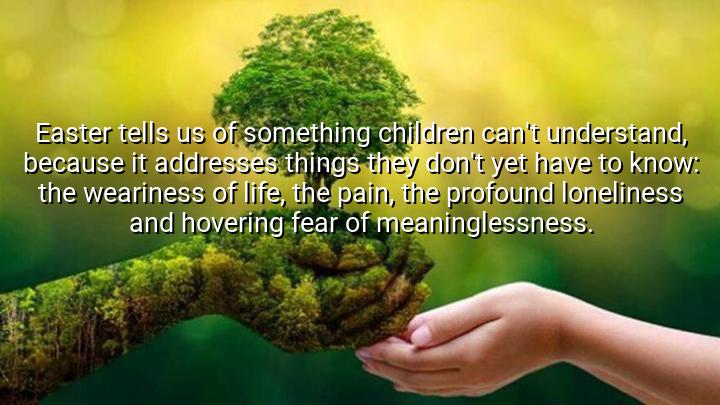




The quote by Frederica Mathewes-Green reflects on the deeper spiritual and emotional themes of Easter that often go beyond a child’s comprehension. She explains that Easter is not only about joy and celebration but also about confronting the weariness of life, the pain that people endure, the profound loneliness that many feel, and the looming fear of meaninglessness that adults encounter as they navigate existence. For children, life is often still filled with innocence and simplicity, so these heavier truths remain distant.
The meaning of this quote is that Easter speaks to the human struggle with suffering and mortality, offering hope in the face of despair. Adults, unlike children, have experienced heartbreak, grief, and the sense of life’s fragility, which makes them able to grasp the true significance of the resurrection. Easter, therefore, is not just a symbolic holiday but a profound reminder that there is redemption, love, and divine purpose even amid life’s deepest sorrows.
The origin of this perspective comes from Mathewes-Green’s role as an Orthodox Christian author and commentator, who often writes about the spiritual dimensions of faith in contemporary life. In the Christian tradition, Easter is not merely about the empty tomb but about Christ’s victory over sin, death, and despair—themes that directly address the fears and struggles of adulthood. Her statement echoes the idea that the resurrection is God’s answer to humanity’s confrontation with suffering and the seeming meaninglessness of life.
Ultimately, the quote underscores Easter’s role as a message of hope for those who know hardship. While children may celebrate with eggs, joy, and family traditions, adults find in Easter a divine assurance that life’s deepest pain and loneliness are not the final word, but are transformed by the promise of resurrection and eternal meaning.

AAdministratorAdministrator
Welcome, honored guests. Please leave a comment, we will respond soon