

During the worst days of apartheid, we turned to the church for hope and courage as we fought a righteous struggle for a democratic, non-racial, non-sexist, just, and prosperous South Africa.
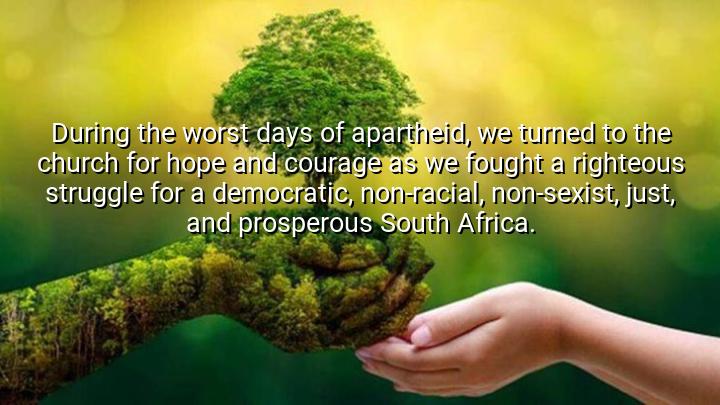




The quote "During the worst days of apartheid, we turned to the church for hope and courage as we fought a righteous struggle for a democratic, non-racial, non-sexist, just, and prosperous South Africa" by Cyril Ramaphosa reflects the crucial role of faith and community in sustaining the fight against apartheid. Ramaphosa acknowledges that during the darkest periods of systemic racial segregation and oppression in South Africa, the church became a vital source of hope and courage for those resisting injustice. It served not only as a place of worship but also as a gathering point for solidarity, encouragement, and moral strength in the face of overwhelming challenges.
In the quote, Ramaphosa frames the anti-apartheid struggle as righteous, highlighting the moral foundation behind the fight for a democratic, non-racial, and non-sexist society. The inclusion of justice and prosperity reflects the broader vision of liberation—going beyond dismantling apartheid to building a future where equality, fairness, and opportunity would be accessible to all South Africans. His words connect the spiritual fortitude gained from the church to the political courage required to continue resisting oppression.
As a key figure in the anti-apartheid movement and later President of South Africa, Ramaphosa speaks from both personal experience and collective memory. During apartheid, churches and faith-based organizations often provided sanctuary for activists and communities under threat. They also gave the movement a moral voice, aligning the struggle for human rights with the principles of faith, justice, and human dignity. This context explains why Ramaphosa ties courage and hope directly to the church's influence.
Ultimately, the quote is both a historical reflection and a moral statement. It reminds us that during times of extreme oppression, the combination of faith, unity, and moral conviction can empower people to persist in their fight for justice. Ramaphosa’s words honor the role of the church in sustaining the spirit of the anti-apartheid movement and underline the vision of a South Africa rooted in equality and shared prosperity.

AAdministratorAdministrator
Welcome, honored guests. Please leave a comment, we will respond soon