

Design is inherently optimistic. That is its power.
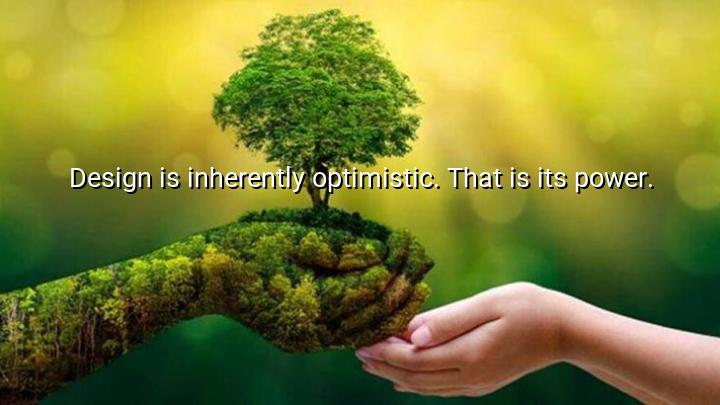




The quote by William McDonough—“Design is inherently optimistic. That is its power.”—reflects his belief in the transformative potential of design to shape a better future. McDonough, an architect and sustainability advocate, emphasizes that the act of design is always forward-looking. Unlike destruction or critique, design is about creating, imagining, and improving. This makes it an inherently hopeful discipline, as it assumes that things can be made better through thoughtful human action.
The meaning of the quote lies in its framing of design as more than just technical or aesthetic work—it is an attitude. To design something is to engage in problem-solving with the assumption that positive change is possible. This is why McDonough calls design’s optimism its power: it inspires innovation, progress, and solutions to challenges ranging from everyday usability to global issues like climate change. In this sense, design becomes a tool not just for function, but for envisioning and enabling a more sustainable and humane world.
The origin of this statement connects to McDonough’s influential work in sustainable design and architecture, especially his co-authored book Cradle to Cradle: Remaking the Way We Make Things (2002). In it, he argued for rethinking industrial and architectural practices to eliminate waste and mimic the efficiency of natural ecosystems. His perspective is rooted in the idea that design is not neutral—it either contributes to problems or creates solutions. By framing design as optimistic, McDonough positions it as a driving force for environmental and social responsibility.
In a broader sense, McDonough’s words serve as a reminder of the philosophical role of design. Every new product, building, or system carries within it the hope of making life better, safer, or more beautiful. By calling design inherently optimistic, he affirms that creativity is not just about style but about envisioning possibilities for improvement. This perspective continues to influence architects, product designers, and innovators worldwide who see design as a pathway to addressing the world’s most urgent challenges.
Would you like me to also give examples of how McDonough’s sustainable projects embody this sense of design as an act of optimism?

AAdministratorAdministrator
Welcome, honored guests. Please leave a comment, we will respond soon