

Design, if it is to be ecologically responsible and socially responsive, must be revolutionary and radical.
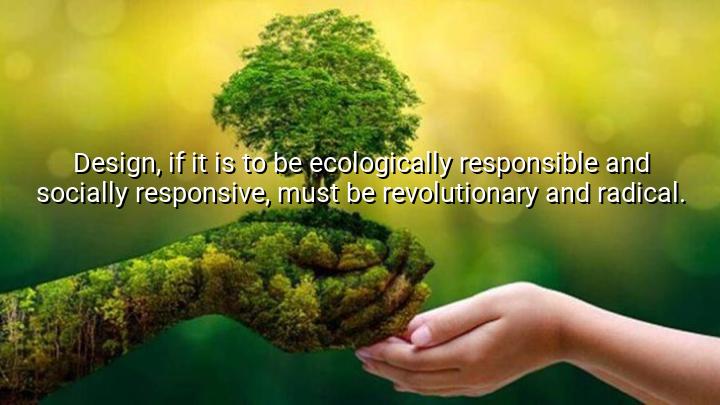




Victor Papanek’s quote—“Design, if it is to be ecologically responsible and socially responsive, must be revolutionary and radical”—emphasizes the importance of approaching design with a sense of urgency and transformation. Papanek argues that design should not merely follow traditional methods or commercial interests, but rather, it should challenge the status quo by addressing the pressing issues of ecology and social justice. In order to be truly responsible, design must be bold and progressive, creating solutions that respond to both environmental sustainability and societal needs.
The origin of this quote lies in Papanek’s work as a designer and educator who championed the idea of socially responsible design. His influential book, Design for the Real World (1971), criticized the design industry for prioritizing consumerism and aesthetic trends over the well-being of people and the planet. Papanek was a pioneer in advocating for designs that serve marginalized communities and contribute positively to the environment. He believed that design should be about problem-solving in ways that benefit society and the world, particularly in terms of ecology and social responsibility.
By calling for revolutionary and radical approaches, Papanek is pushing for a fundamental shift in how design is conceived and implemented. Ecologically responsible design considers the environmental impact of products and systems, while socially responsive design addresses human needs and social issues. Papanek contended that in order to create real change, design must break free from conventional norms and be driven by values of sustainability, equity, and innovation.
Ultimately, Papanek’s quote challenges designers to rethink their role in shaping the future. Design should not just serve consumer interests but should actively contribute to building a more sustainable and just world. His call for revolutionary and radical design reflects his belief that design has the power to address some of the most urgent global challenges, making it a force for good in solving environmental and social problems.

AAdministratorAdministrator
Welcome, honored guests. Please leave a comment, we will respond soon