

Contempt for happiness is usually contempt for other people's happiness, and is an elegant disguise for hatred of the human race.
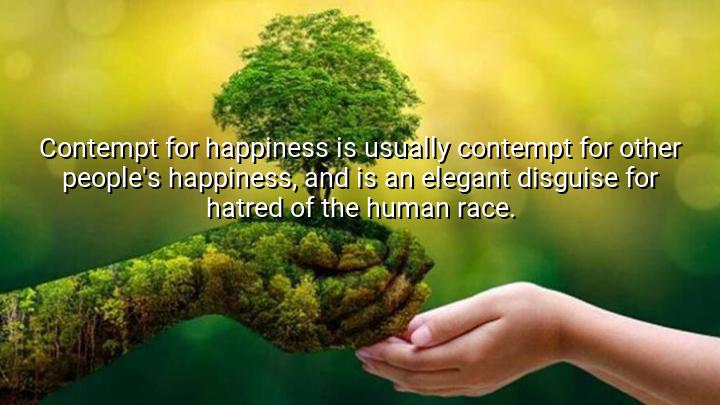




In this quote, Bertrand Russell suggests that contempt for happiness often stems from a deeper disdain for other people's joy and well-being. He implies that when someone dismisses or shows disdain for happiness, it’s not merely a rejection of an emotion but a veiled form of hatred towards humanity itself. By disregarding happiness, a person may be projecting their own negativity, frustration, or bitterness towards the human condition, hiding behind a false sense of superiority or intellectualism.
Russell’s insight points to the self-destructive nature of contempt for happiness. He argues that this disdain goes beyond simple cynicism about life or personal dissatisfaction—it becomes a philosophical rejection of the very essence of human existence. Rather than acknowledging happiness as a valuable and worthwhile pursuit, it is viewed with suspicion or even hostility, signaling a profound alienation from the collective experience of joy, love, and human connection.
The origin of this quote comes from Russell's work in philosophy and social commentary, where he often critiqued societal norms, human nature, and the pursuit of meaning. As a philosopher deeply interested in the nature of human relationships, ethics, and happiness, Russell believed that negativity towards happiness was a reflection of deeper emotional or philosophical struggles. His ideas often explored how people’s attitudes toward happiness and success were intertwined with their views on life and society.
Ultimately, Russell’s quote highlights how contempt for happiness can be a mask for deeper issues, like alienation or self-loathing, and reflects a rejection of the fundamental joy and interconnectedness of the human experience. It invites us to question the underlying reasons for dismissing happiness and to consider whether such feelings point to broader, more troubling views about the human race and existence itself.

AAdministratorAdministrator
Welcome, honored guests. Please leave a comment, we will respond soon