

Compassion is sometimes the fatal capacity for feeling what it is like to live inside somebody else's skin. It is the knowledge that there can never really be any peace and joy for me until there is peace and joy finally for you too.
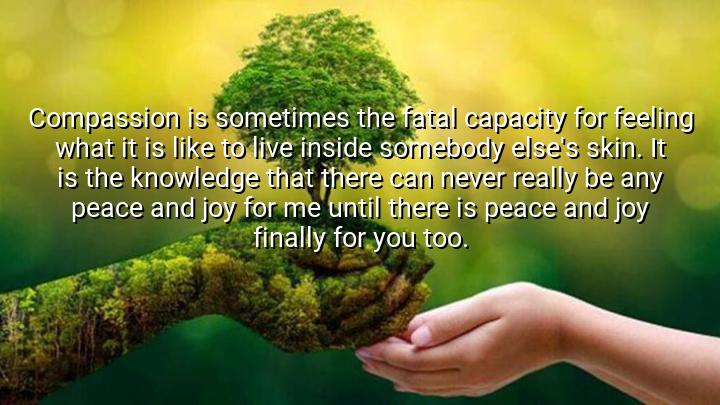




The quote “Compassion is sometimes the fatal capacity for feeling what it is like to live inside somebody else's skin. It is the knowledge that there can never really be any peace and joy for me until there is peace and joy finally for you too.” is attributed to Frederick Buechner, the American writer, theologian, and preacher. At its core, the statement defines compassion as more than sympathy—it is the deep, sometimes overwhelming capacity to fully feel another person’s struggles and joys as though they were one’s own. Buechner highlights that this profound empathy binds human well-being together, making individual peace and joy inseparable from the peace and joy of others.
The origin of this idea comes from Buechner’s broader work as both a novelist and a theologian. Known for blending literary artistry with spiritual insight, he often wrote about the interconnectedness of human lives and the moral call to care for others. This quote reflects his theological conviction that genuine knowledge of life and faith cannot be separated from compassion—that our destinies are linked, and that self-centered happiness is incomplete without consideration for others.
The meaning of the quote emphasizes the radical nature of true compassion. It is “fatal” in the sense that it breaks down the walls of self-protection and forces one to confront pain and suffering that might otherwise be ignored. At the same time, it illuminates a fundamental truth: that harmony and joy cannot exist in isolation. For Buechner, compassion reveals that humanity is interconnected, and therefore one person’s suffering inevitably diminishes the well-being of all.
Ultimately, Buechner’s reflection is both moral and spiritual. He calls us to embrace compassion as a guiding principle, even though it makes us vulnerable to the pain of others. His words remind us that lasting peace and joy are collective realities, achievable only when empathy and solidarity unite individuals and communities. In this way, compassion becomes not just an emotion but a transformative kind of knowledge about the human condition.

AAdministratorAdministrator
Welcome, honored guests. Please leave a comment, we will respond soon