

Come, gentlemen, I hope we shall drink down all unkindness.
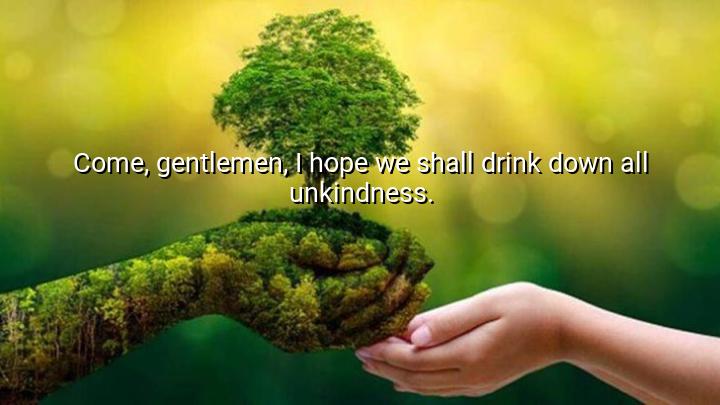




The quote "Come, gentlemen, I hope we shall drink down all unkindness" comes from William Shakespeare's play "The Taming of the Shrew", specifically Act 5, Scene 2. In this line, the character Petruchio is addressing the other characters, proposing that they drink to dissolve any bitterness or hostility that may have existed between them. The word "unkindness" here refers to any ill will, misunderstandings, or negative feelings that might have been present in the previous parts of the play.
Shakespeare often used drinking and feasting as symbolic acts in his works, representing reconciliation and unity. In this case, Petruchio suggests that a shared drink could serve as a way to put aside past conflicts and foster a spirit of friendship and goodwill. The idea of "drinking down" is metaphorical, indicating the intention to remove or overcome negative emotions, particularly anger or resentment.
The quote also reflects the social dynamics of Shakespeare's time, where communal gatherings, such as drinking together, were often seen as opportunities for both bonding and resolving disputes. Petruchio’s attempt to “drink down” unkindness signals a desire to move beyond previous tensions, particularly the contentious relationship between him and his wife, Katherina. It reflects a theme of reconciliation and the potential for transformation in relationships.
Ultimately, this line encapsulates Shakespeare’s ability to weave complex themes of human interaction into simple, yet profound dialogue. It serves as a reminder of the importance of forgiveness, communication, and the potential for peace, achieved not through confrontation but through mutual respect and shared experiences.

AAdministratorAdministrator
Welcome, honored guests. Please leave a comment, we will respond soon