

Childhood is Last Chance Gulch for happiness. After that, you know too much.
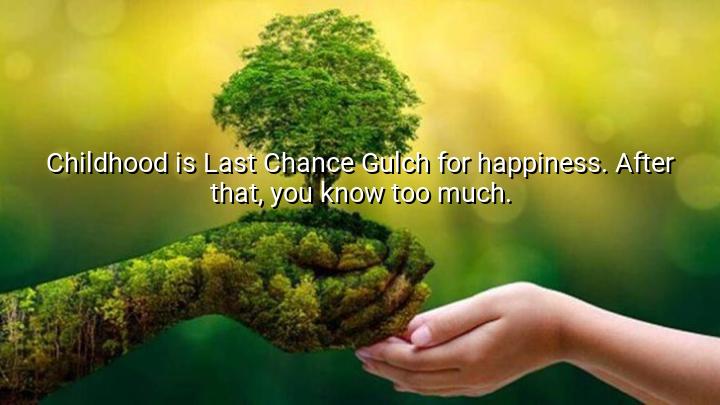




The quote "Childhood is Last Chance Gulch for happiness. After that, you know too much." by Tom Stoppard uses vivid imagery to describe childhood as a fleeting, precious stage in life when pure happiness is most accessible. By referring to it as “Last Chance Gulch,” a phrase historically tied to gold prospecting towns, Stoppard suggests that this period is like the final, richest vein of emotional gold before the complexity of adulthood sets in.
The meaning centers on the contrast between innocence and knowledge. In childhood, happiness is often simpler, unburdened by the responsibilities, losses, and moral complexities that come with growing up. Stoppard’s observation that “you know too much” afterward points to the way awareness of life’s hardships, disappointments, and contradictions can complicate or diminish the unfiltered joy we experience as children.
The origin of this remark ties to Stoppard’s broader work as a playwright and writer known for blending wit with philosophical insight. His works often explore the tension between idealism and reality, as well as the bittersweet nature of human experience. In this quote, he distills that tension into a pithy reflection on the unique emotional freedom of youth.
Ultimately, the quote serves as both a nostalgic reflection and a gentle warning. It invites us to value the purity of childhood joy, while also recognizing that the “last chance” is not necessarily about losing happiness entirely—it’s about the difficulty of finding it in as simple and unclouded a form once life knowledge inevitably changes our perspective.

AAdministratorAdministrator
Welcome, honored guests. Please leave a comment, we will respond soon