

By aiming for paradise, we lose sight of earth. Hope of a beyond and aspiration to an afterlife engender a sense of futility in the present. If the prospect of getting taken up to paradise generates joy, it is the mindless joy of a baby picked up from his crib.
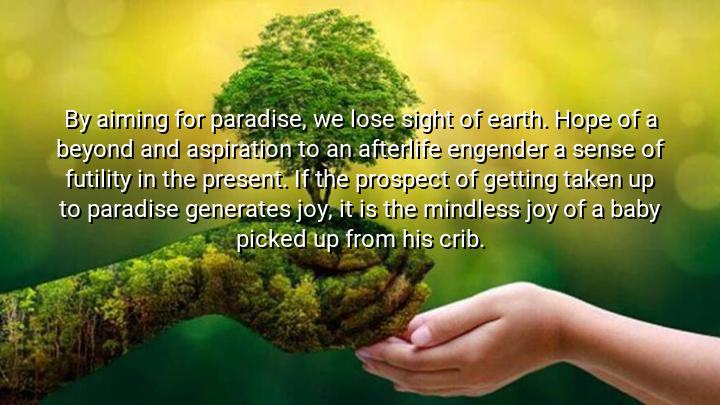




Michel Onfray’s quote, "By aiming for paradise, we lose sight of earth. Hope of a beyond and aspiration to an afterlife engender a sense of futility in the present," critiques the idea of focusing on an idealized afterlife or spiritual goals at the expense of the tangible realities of life on earth. Onfray suggests that the belief in an afterlife can distract individuals from fully experiencing and engaging with the present. By focusing on the promise of a paradise that lies beyond this life, people may neglect the importance of living meaningfully in the here and now, leading to a sense of wasted potential in their current existence.
The second part of the quote, "If the prospect of getting taken up to paradise generates joy, it is the mindless joy of a baby picked up from his crib," compares the joy of expecting an afterlife to a baby’s simple, unthinking joy. Onfray likens the bliss of anticipating paradise to the innocence and naivety of a baby who finds comfort in being held without understanding the bigger picture. This suggests that the joy derived from a belief in the afterlife is superficial, lacking the depth of adult comprehension and engagement with the complexities of life.
Onfray, a French philosopher known for his atheistic views and critique of organized religion, often emphasizes the importance of focusing on human experience in the present, rather than postponing fulfillment for a future or divine promise. His philosophy advocates for embracing materialism, finding meaning in the physical world, and creating value through actions in life, rather than looking toward an afterlife for fulfillment. This quote reflects his belief that focusing on external, spiritual aspirations can diminish the richness of our lived experiences.
The origin of this quote lies in Onfray's broader philosophical stance on atheism and secularism, where he critiques religious teachings that prioritize the afterlife over the present life. He argues that the pursuit of paradise and the concept of an afterlife encourage disengagement from the realities of human existence, leaving individuals blind to the importance of shaping their current lives. Through this perspective, Onfray calls for a focus on the tangible world, advocating for a deeper, more grounded connection to life on earth.

AAdministratorAdministrator
Welcome, honored guests. Please leave a comment, we will respond soon