

But, when the work was finished, the Craftsman kept wishing that there were someone to ponder the plan of so great a work, to love its beauty, and to wonder at its vastness.
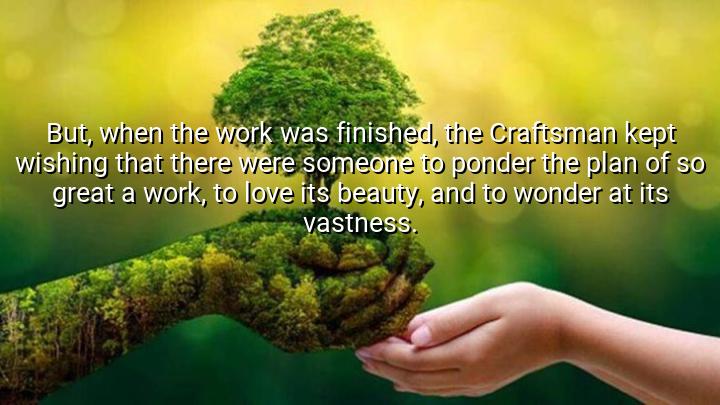




In this quote, Giovanni Pico della Mirandola reflects on the deep longing of a Craftsman after completing a great and intricate work. The Craftsman is not only concerned with the physical act of creating, but also with the desire for someone to appreciate the plan, the beauty, and the vastness of the creation. This yearning for admiration and reflection highlights the human need for recognition and connection with others, especially when one has poured effort and passion into a significant endeavor.
Pico della Mirandola suggests that the value of any creation goes beyond its mere construction; it lies in the ability of others to perceive its aesthetic qualities and understand the thought and vision behind it. The Craftsman seeks not only praise for the final product but also for others to engage with the deeper meaning and complexity of the work, demonstrating a desire for intellectual and emotional connection through art or craftsmanship.
The origin of this perspective comes from Pico della Mirandola's Renaissance humanist philosophy, where the importance of human creativity and individual expression was highly valued. His work often explored the relationship between the creator and the world, emphasizing how human beings have the unique ability to shape and influence their environment. This quote captures a sentiment about the enduring significance of art, creation, and the need for dialogue about the impact of one's work on others.
Ultimately, this quote illustrates the Craftsman’s desire for not just practical completion, but for appreciation of the full depth and purpose of their creation. It serves as a reflection on the intrinsic human desire to have one's efforts recognized, not merely for their technical achievements, but for their artistic beauty, purpose, and cultural significance.

AAdministratorAdministrator
Welcome, honored guests. Please leave a comment, we will respond soon