

But I say to you, Love your enemies and pray for those who persecute you, so that you may be sons of your Father who is in heaven; for he makes his sun rise on the evil and on the good, and sends rain on the just and on the unjust.
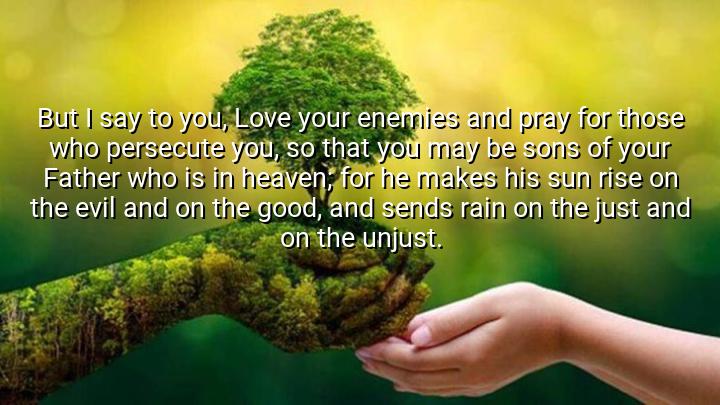




This quote, spoken by Jesus Christ, is a teaching from the Sermon on the Mount, which is one of the central teachings in Christian scripture, found in the Gospel of Matthew (5:44). The message encourages a radical form of love and forgiveness, urging individuals to extend kindness even to those who consider them enemies. By advising his followers to love their enemies and pray for those who persecute you, Jesus is challenging conventional views of justice and retribution. He calls for a love that transcends human boundaries and retaliatory instincts.
The quote also introduces the idea that the love of God is unconditional and not based on human merit or righteousness. Jesus points out that God does not withhold blessings, such as the sun and rain, from the evil or the just—both receive the same natural gifts. This serves as a reminder that God's love is given freely to all, regardless of their actions. The analogy of the sun and rain emphasizes the idea that God's grace is universal, not based on deserving behavior, but extended to everyone indiscriminately.
By following this teaching, individuals can embody the qualities of the Father in heaven, becoming "sons of your Father" by demonstrating mercy, compassion, and love even to those who wrong them. Jesus presents love as the highest form of righteousness, suggesting that by loving one’s enemies, a person reflects the divine nature of God. This approach, though difficult, leads to spiritual growth and a closer relationship with the divine.
Ultimately, this quote calls Christians to a higher standard of behavior, one that challenges the cycle of hatred and retaliation. It teaches that true spiritual maturity is demonstrated by the capacity to love and forgive, even in the face of persecution and wrongdoing. Jesus’s words redefine the concept of justice, emphasizing love and mercy as the cornerstones of the divine kingdom.

AAdministratorAdministrator
Welcome, honored guests. Please leave a comment, we will respond soon